
Aruba
Under two hours from Bogotá, Aruba gives you white-sand beaches, a desert national park and dry weather most of the year. Colombians need no visa.
- Where it is
- Southern Caribbean, off the coast of Venezuela; an autonomous country within the Kingdom of the Netherlands. Capital: Oranjestad.
- Getting there
- Direct from Bogotá in about 1 h 50 min to 2 h (Avianca daily, plus seasonal Wingo and LATAM flights). Wingo also flies direct from Medellín, Cali and Barranquilla, depending on the season.
- Weather
- Semi-arid and warm year-round: highs of about 27 to 32 °C (81 to 90 °F), a constant trade-wind breeze and around 450 mm (18 in) of rain a year, mostly from October to December.
- Documents
- No visa: valid passport, online ED Card with the USD 20 Sustainability Fee, return ticket, accommodation booking, proof of funds and yellow fever vaccination.
- Money
- Aruban florin (AWG), pegged to the US dollar (about AWG 1.79 per USD). Dollars are accepted almost everywhere and Visa and Mastercard are widely used; some shops won't take USD 50 or 100 bills.
- Language
- Papiamento and Dutch are official; almost everyone also speaks English and Spanish.
- Time zone
- One hour ahead of Colombia (UTC-4, no daylight saving time).
- Plugs
- Types A and B, same as Colombia; about 120 V and 60 Hz. You won't need an adapter.
Aruba: steady sun, steady wind, turquoise sea
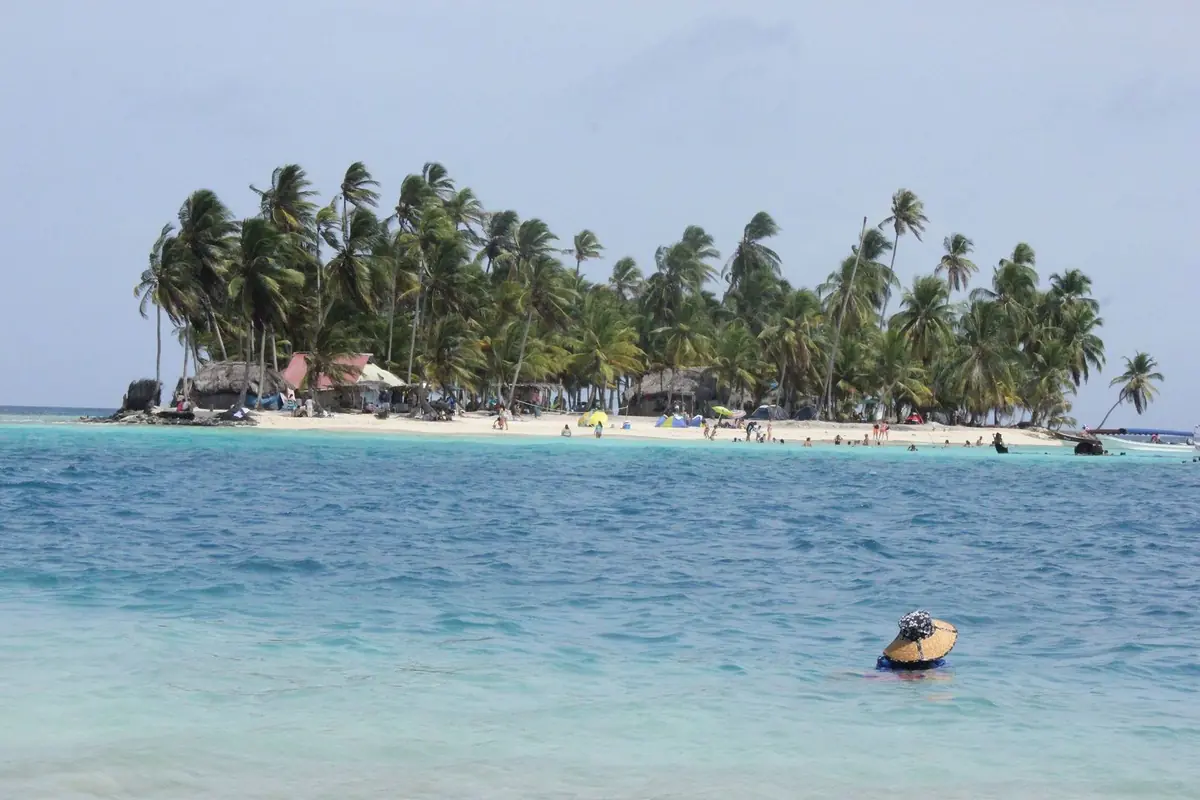
Aruba sits about 25 km (16 mi) off Venezuela's Paraguaná Peninsula and is an autonomous country within the Kingdom of the Netherlands. If you're expecting Caribbean jungle, the landscape will surprise you: cactus, volcanic rock and dry hills. The wind-battered north coast is a sharp contrast to the gentle beaches of the west, where the water is clear enough to see the bottom several meters down.
It's an easy trip from Colombia: short direct flights, US dollars accepted almost everywhere, safe tap water, and locals who speak Papiamento, Dutch, English and Spanish. The island also sits outside the main hurricane belt and gets little rain, so it's a dependable bet for a vacation in any month.
Don't miss
-
01
Eagle Beach and the fofoti trees
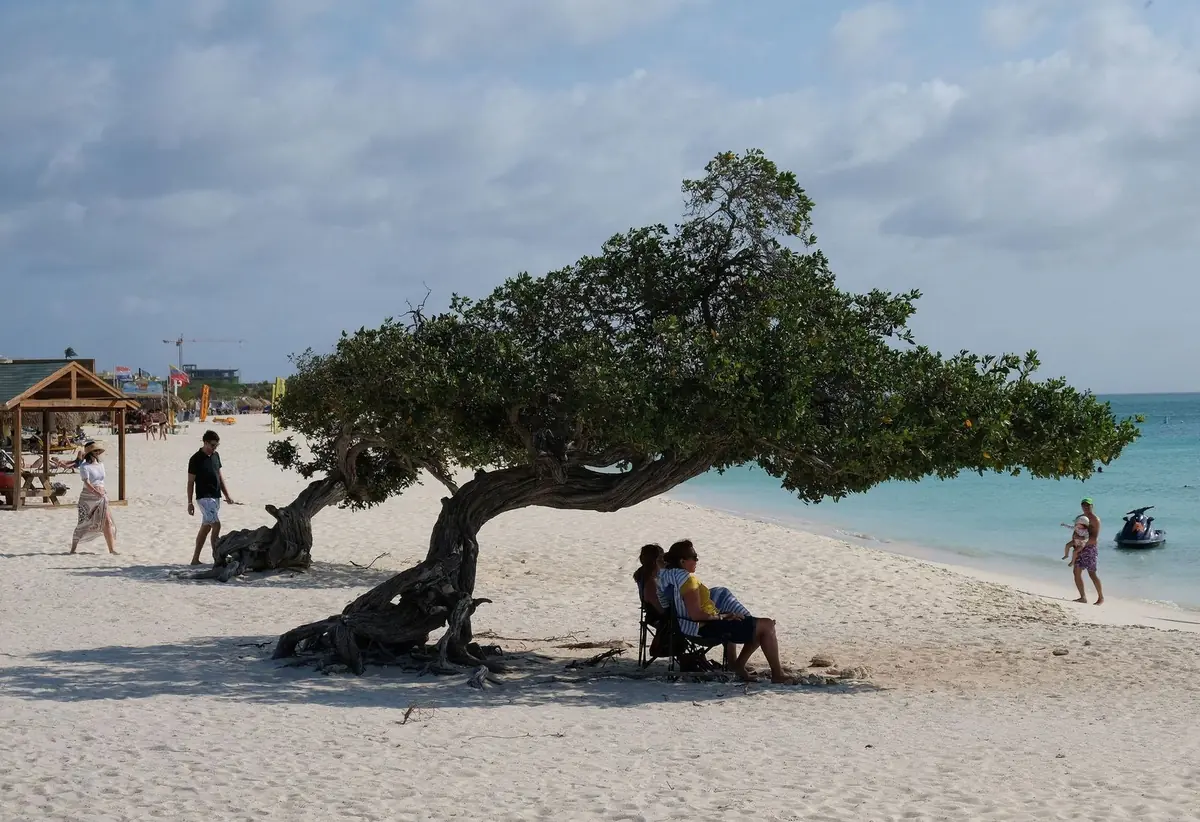
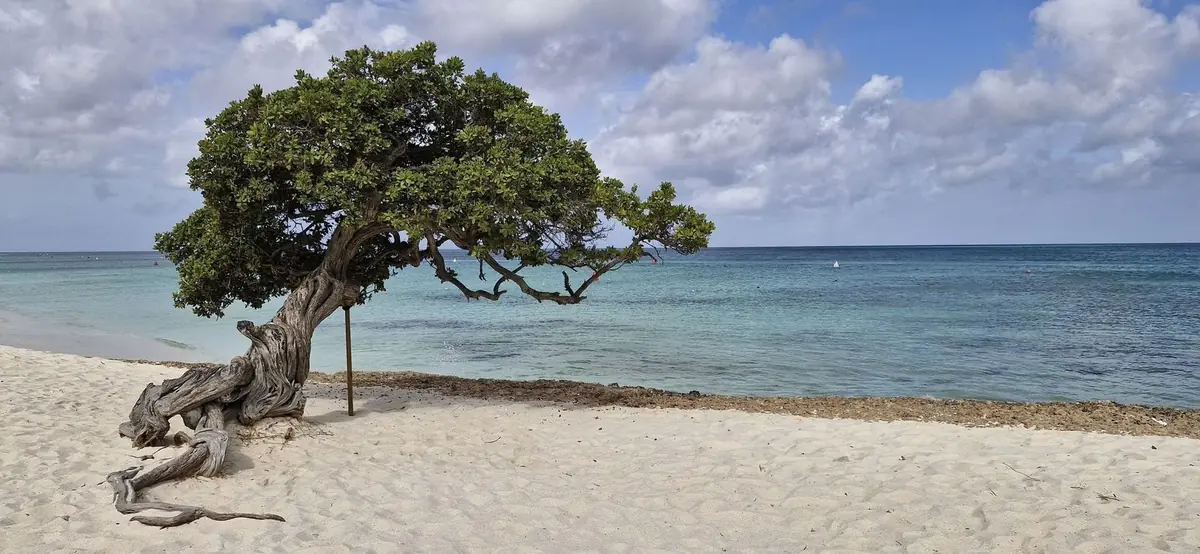
Aruba's widest beach, with fine sand and a laid-back feel. Its fofoti trees, bent southwest by the wind, are the island's classic photo; many people mistake them for divi-divi trees. Go at sunset.
-
02
Palm Beach
The strip of high-rise hotels, restaurants and water sports, with calm water that's ideal for swimming or paddleboarding. A good base for groups who want everything within walking distance. Get there early if you want the beach less crowded.
-
03
Arikok National Park
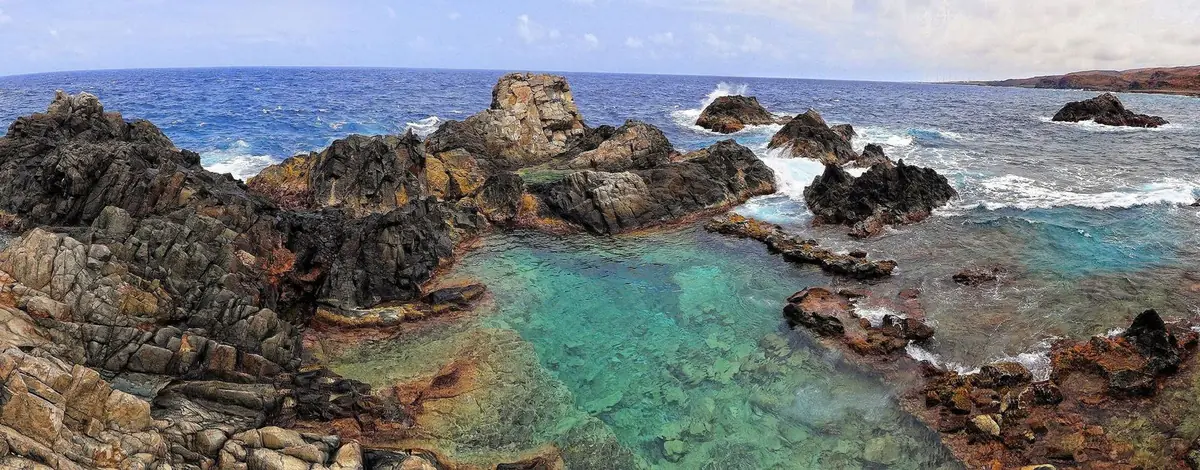
About 20% of the island is national park: caves with Indigenous petroglyphs, dunes, wild coastline and the Conchi natural pool, reachable only by 4x4, on horseback or on foot. Rangers close it when the sea is rough.
-
04
Baby Beach and San Nicolás
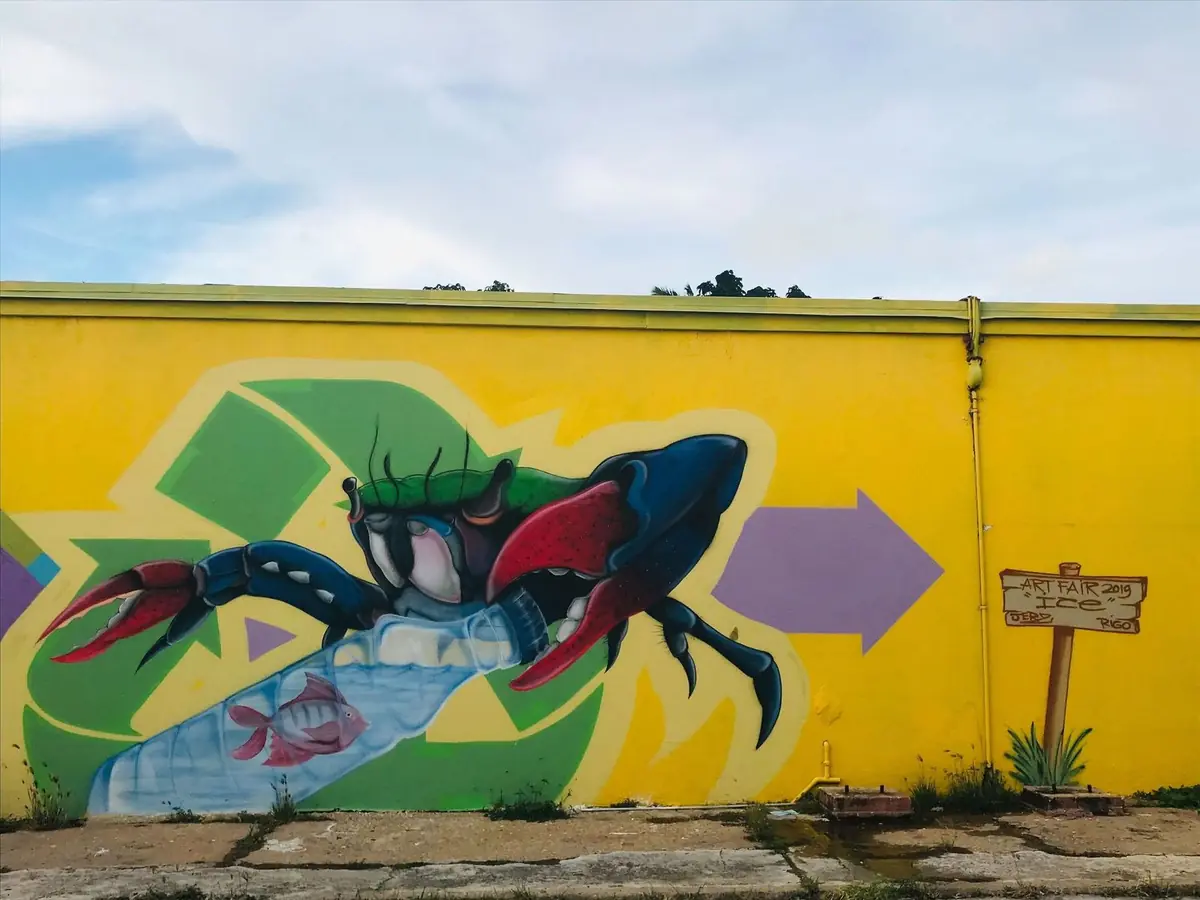
At the island's southeastern tip, Baby Beach is a shallow lagoon sheltered by a breakwater, perfect for kids and easy snorkeling. On the way back, walk the murals of San Nicolás, Aruba's street-art district.
-
05
Oranjestad
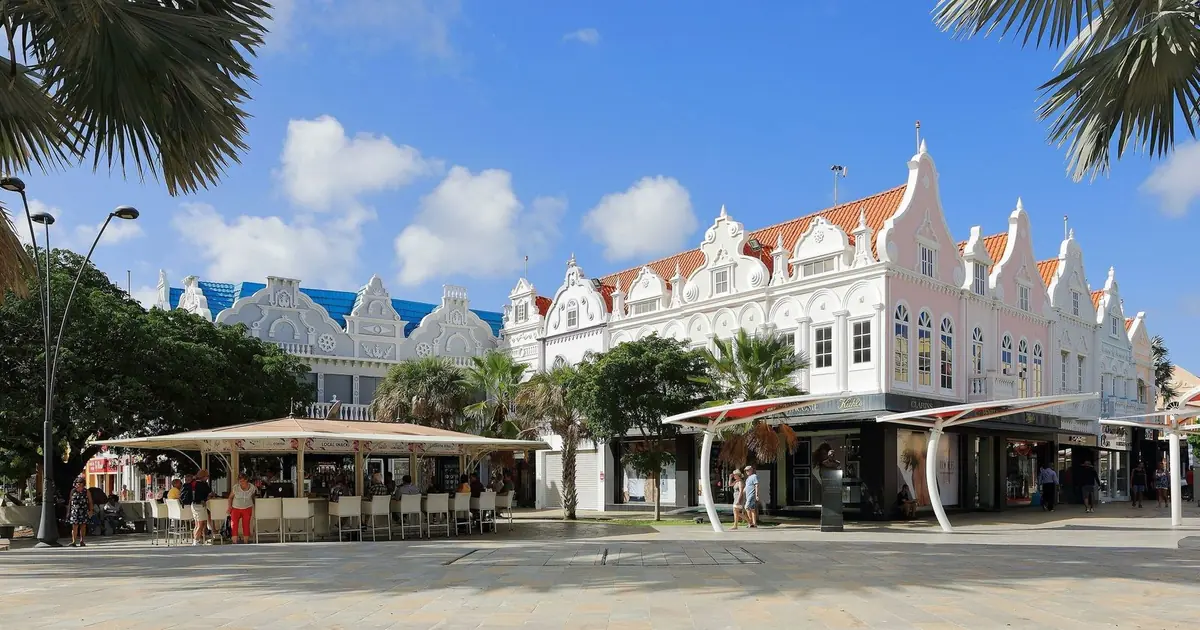
The capital mixes pastel Dutch-style facades, pedestrian plazas, Fort Zoutman and the Willem III Tower. Walk it in the morning or late afternoon to avoid the strong midday sun.
-
06
Snorkel the Antilla wreck
A 122 m (400 ft) German freighter scuttled by its own crew in 1940 off Malmok. It's one of the largest shipwrecks in the Caribbean, and part of it sits near the surface, visible with a snorkel on calm days.
When to go
Aruba works year-round. February to May is the driest, most pleasant stretch, though prices climb in December, January and Holy Week with demand. June to September is hotter and the trade winds blow hard, ideal for kitesurfing. October to December brings a bit more rain, usually in short showers. Hurricane season rarely hits the island directly.
- Jan: Good. Cool and dry, peak-season prices
- Feb: Best. Dry, pleasant breeze, Carnival season
- Mar: Best. One of the driest months
- Apr: Best. Dry and sunny; Holy Week costs more
- May: Best. Dry, fewer tourists, good prices
- Jun: Good. Strong wind, perfect for kitesurfing
- Jul: Good. Hot and windy, school vacations
- Aug: Good. Hotter, with less wind
- Sep: Good. Hottest month, very calm sea
- Oct: Rainy. Short showers begin, still plenty of sun
- Nov: Rainy. Rainiest month, brief showers
- Dec: Rainy. Some rain; year-end gets pricey
-
Best
Feb – May
The best time to go.
-
Good
Jan · Jun – Sep
A good time, with a catch on weather or crowds.
-
Rainy
Oct – Dec
More rain: keep plans flexible.
What you need to travel
For Colombian passport holders: no visa is required for tourism in Aruba since December 3, 2015. You can stay up to 30 days per visit, and the stay can be extended. Before you fly, fill out the online ED Card and pay the Sustainability Fee. Traveling on another passport? Requirements differ, so message us and we'll check yours.
Checked in September 2026 with Aruba Tourism Authority: travel requirements for Colombians. Rules change, so we confirm what applies to you when you book.
- Colombian passport valid for your entire stay.
- ED Card (embarkation and disembarkation card) completed before your trip, only on the official portal edcardaruba.aw. It's mandatory for every traveler, including children and infants. The form itself is free.
- Sustainability Fee of USD 20 per person aged 8 and over, paid by credit card when you fill out the ED Card. It's charged once a year (if you return in the same year, request a refund from AWSS).
- Return or onward ticket.
- Confirmed accommodation booking, or a letter of guarantee if you're staying with family or friends.
- Proof of funds: the Aruba Tourism Authority mentions USD 75 to 150 per person per day depending on the type of accommodation, in cash or by card.
- Yellow fever vaccination at least 10 days before travel, since Colombia is listed as a country with risk of transmission.
- Travel insurance with medical coverage: recommended, not required.
Take the full guide with you
Entry requirements, best months, local tips and our favorite places to eat in Aruba, in a PDF you can keep on your phone.
Bokana tips
What we've learned running trips, and what we'd tell a friend before they go.
-
Official portal only
Fill out the ED Card only at edcardaruba.aw. Plenty of copycat sites charge extra fees for the same form. The only legitimate payment is the USD 20 Sustainability Fee, made by credit card.
-
Oxybenzone-free sunscreen
Since July 2020, Aruba has banned the sale and import of sunscreens with oxybenzone to protect the reef. Bring a mineral, zinc oxide sunscreen and reapply often: the breeze fools you and the sun burns fast.
-
A car for the north coast
For Arikok and the Conchi natural pool you need a 4x4 or a guided tour; a regular car can't handle those dirt tracks. For the rest of the island a small car is enough. Roads are good and you drive on the right.
-
Pay in dollars, get florins back
You can pay for almost everything in dollars, but change usually comes in florins. Carry small bills: some businesses won't accept USD 50 or 100 notes. A 15 to 20% tip is customary.
-
Tap water
Tap water is safe to drink: it's desalinated and very high quality. Bring a reusable bottle and refill it at your hotel. You'll save money and plastic.
-
Start Arikok early
The park opens early, and from 10 a.m. the heat is intense with almost no shade. Go in first thing, and bring at least 2 liters (about half a gallon) of water per person, a cap and closed shoes for the rocks.
-
Let the wind guide you
West-coast beaches like Eagle, Palm and Arashi are calm. The north and east coasts have strong currents: enjoy them from land, and don't go in the water anywhere without a marked swimming area.
What to eat
Keshi yena
A Gouda or Edam cheese stuffed with stewed chicken or beef, olives, capers and raisins, then baked. The island's signature dish.
Pastechi
A fried, half-moon pastry filled with cheese, beef, chicken or tuna. The classic street breakfast, best with a coffee.
Pan bati
A slightly sweet cornmeal pancake served alongside soups, stews and fried fish.
Funchi
A firm cornmeal side, similar to polenta, served with goat or fish stews.
Group trips to Aruba
Book your own spot, travel with a group, and have someone from Bokana with you the whole way.
Picture yourself in Aruba?
Let's plan it together.
Join one of our groups or bring your own people on a private trip.
More destinations in the Caribbean
Sources and photo credits
- Aruba Tourism Authority: requisitos de viaje para colombianos (7 de mayo de 2025)
- Aruba Tourism Authority: requisitos de entrada
- Aruba Tourism Authority: Sustainability Fee
- Portal oficial de la ED Card de Aruba
- Gobierno de los Países Bajos (Netherlands Worldwide): ¿necesito visado para las partes caribeñas del Reino?
- Cancillería de Colombia: lista de países que exigen visa a colombianos (actualización del 12 de agosto de 2024)
- Cancillería de Colombia: Reino de los Países Bajos (exención de visa para Aruba desde el 3 de diciembre de 2015)
- Aruba Tourism Authority: clima
- Aruba Tourism Authority: datos de la isla (idioma, moneda, zona horaria)
- Aruba Tourism Authority: moneda y propinas
- Aruba Tourism Authority: agua potable
- Aruba Tourism Authority: Parque Nacional Arikok
- Aruba Tourism Authority: comida típica
- Aruba Tourism Authority: murales de San Nicolás
- Climates to Travel: clima de Aruba mes a mes
- Wikipedia: SS Antilla (1939)
- Wikipedia: Aeropuerto Internacional Reina Beatrix (aerolíneas y destinos)
- Caribbean Journal: Avianca reanuda vuelos a Aruba y Curazao (4 de enero de 2026)
- Momondo Colombia: vuelos Bogotá a Aruba (duración y frecuencias)
- World Standards: enchufes y voltaje por país
- SmartGreenPost: Aruba prohíbe bloqueadores con oxibenzona (2020)
- TripAdvisor - Zeerovers
- One Happy Island - Zeerovers
- VisitAruba - Zeerovers
- TripAdvisor - Eduardo's Beach Shack
- One Happy Island - Eduardo's Beach Shack
- TripAdvisor - The Old Cunucu House
- One Happy Island - The Old Cunucu House
- TripAdvisor - Driftwood
- Driftwood (web oficial)
- TripAdvisor - Charlie's Bar
- Caribbean Journal - San Nicolás (sept. 2026)
- Charlie's Bar (web oficial)
- TripAdvisor - Passions on the Beach
- Passions on the Beach (web oficial)
Photos: SIryn (CC BY-SA 4.0), Wikimedia Commons (main photo) · Martin Falbisoner (CC BY-SA 4.0), Wikimedia Commons · Rarends297 (CC0), Wikimedia Commons · Bjørn Christian Tørrissen (CC BY-SA 3.0), Wikimedia Commons · Caribiana (CC BY-SA 4.0), Wikimedia Commons.