
Punta Cana
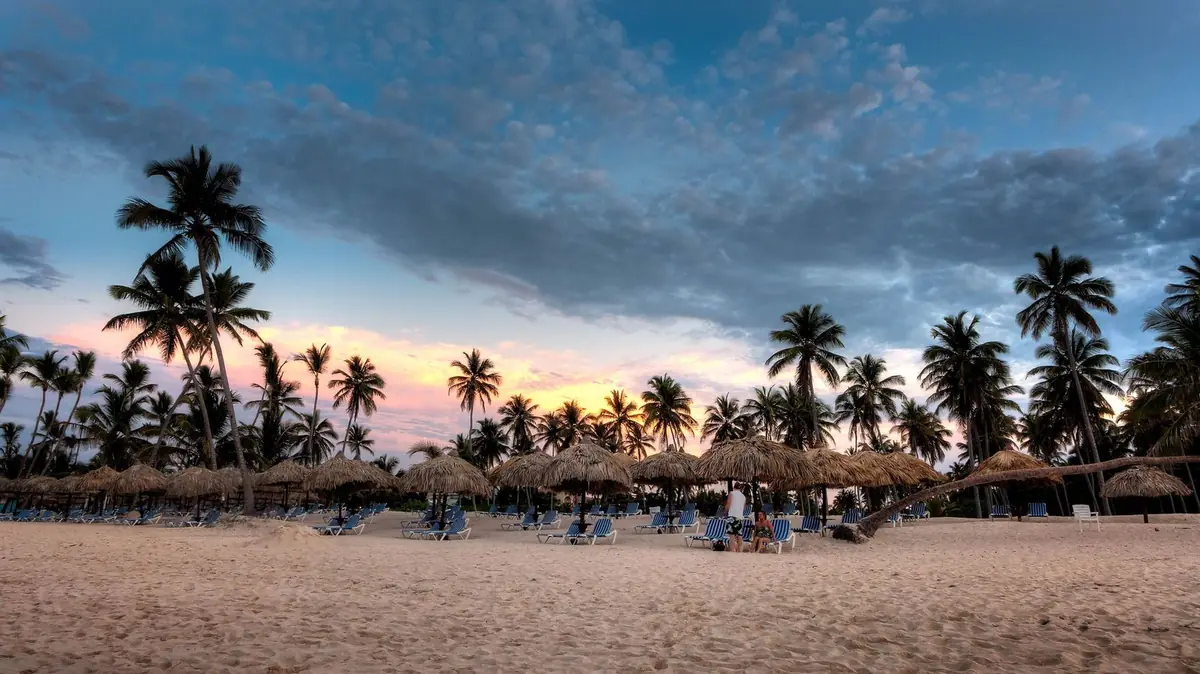
Under three hours from Bogotá or Medellín, Punta Cana and Bávaro pair long beaches with protected islands and a day trip to Santo Domingo's Colonial Zone.
- Where it is
- Eastern tip of the Dominican Republic, in La Altagracia province. Punta Cana International Airport (PUJ) is right in the area.
- Getting there
- Nonstop. Bogotá to Punta Cana takes about 2 h 50 min (Arajet, Avianca, Wingo); Medellín to Punta Cana, about 2 h 40 min (Arajet, JetSMART). There are also nonstop flights from Cali (JetSMART) and Cartagena (Arajet).
- Weather
- Warm year-round: average highs run from 28.5 °C (83 °F) in January to 32 °C (90 °F) in August, with lows of 21 to 24 °C (70 to 75 °F) (NOAA, 1991–2020). Most rain falls from May to November; September is the wettest month.
- Documents
- For Colombian passport holders: a valid passport, no visa, the free e-Ticket form and a tourist card, which is already included in your airfare.
- Money
- Dominican peso (DOP). Hotels, tour operators and tourist shops accept US dollars and cards; carry pesos for colmados (corner stores), markets and small purchases. Exchange money only at banks or licensed exchange houses.
- Language
- Spanish
- Time zone
- UTC-4, no daylight saving time: one hour ahead of Colombia.
- Plugs
- Types A and B (flat pins, as in Colombia), 110 V, 60 Hz. You won't need an adapter.
Turquoise water, protected islands, a colonial city
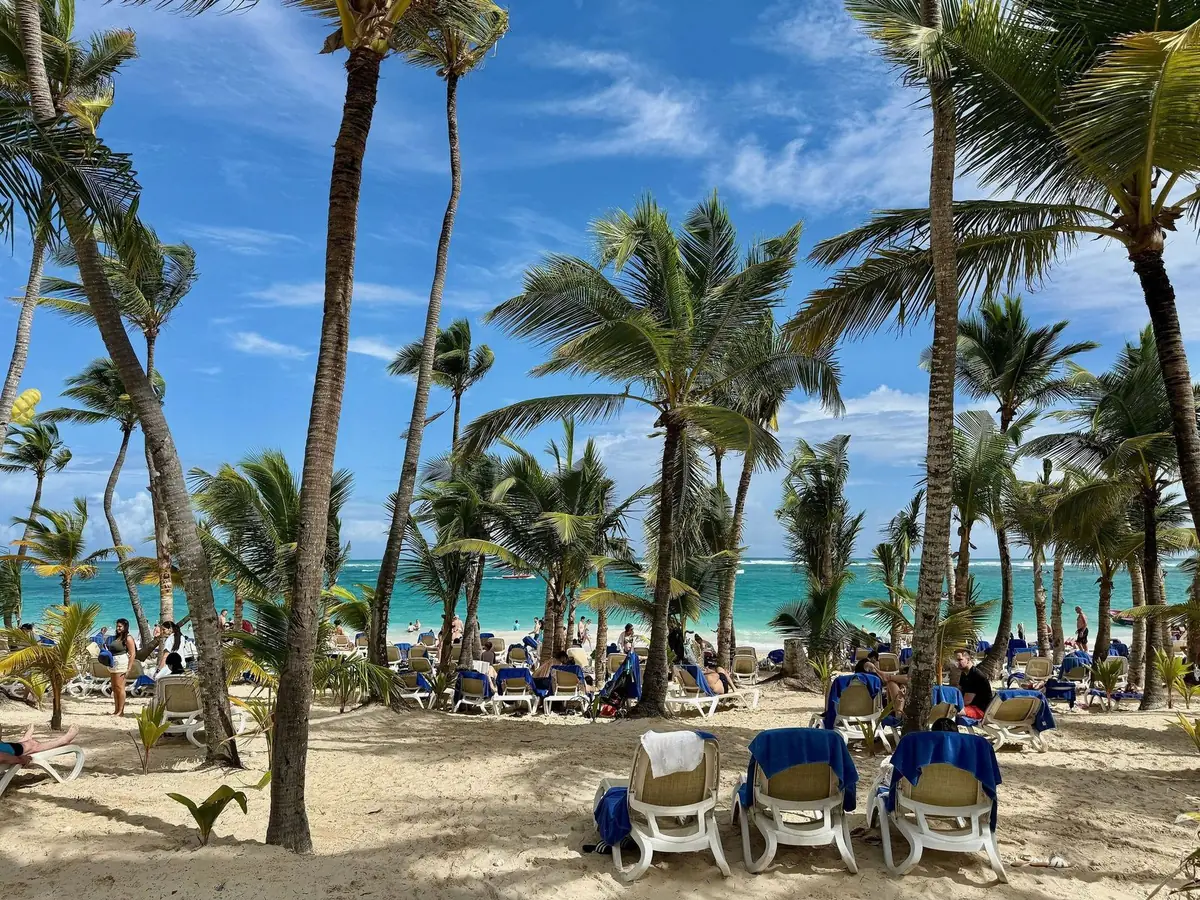
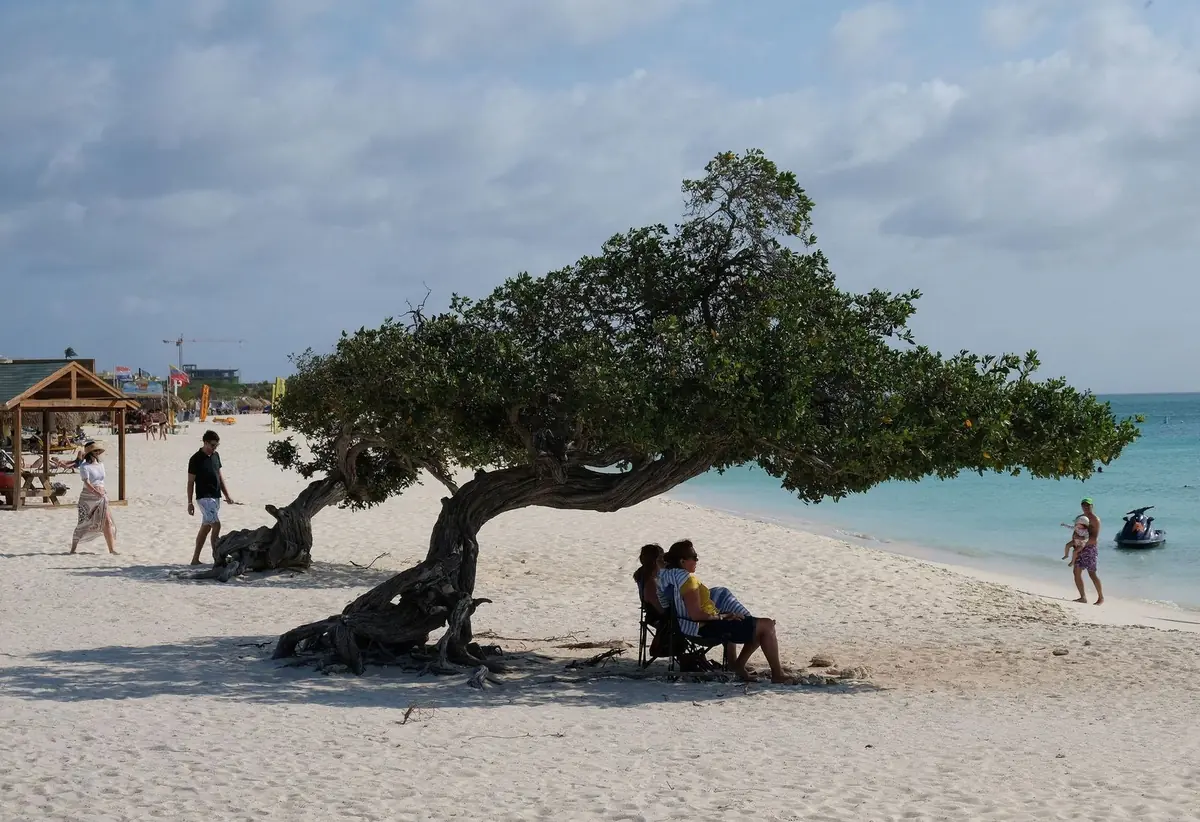
Punta Cana and Bávaro sit at the eastern tip of the Dominican Republic, in La Altagracia province, where the Caribbean meets the Atlantic. The coast runs for mile after mile of white sand, and most hotels are all-inclusive, which makes group travel much simpler: meals, drinks and beach activities are covered from day one, and you decide how much time to spend by the pool and how much to spend exploring.
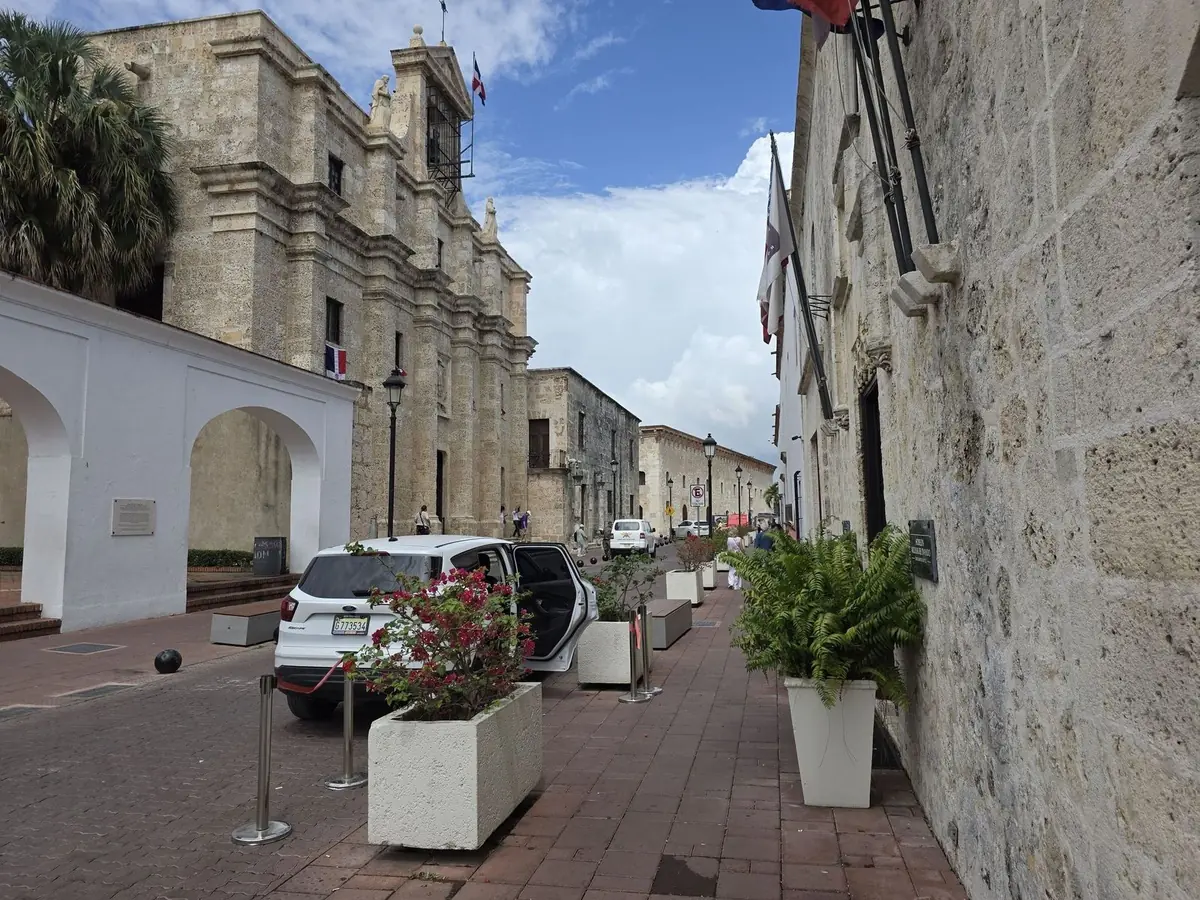
The best of it lies outside the resort. To the southeast, Cotubanamá National Park protects Saona Island and its natural pool of shallow water. Off La Romana, Catalina Island is a natural monument with a coral wall for snorkeling and diving. To the north, Macao still feels like a true public beach, with surf schools on the sand. And just over two hours away by road, Santo Domingo's Colonial Zone, a UNESCO World Heritage Site since 1990, is home to the first cathedral in the Americas.
Don't miss
-
01
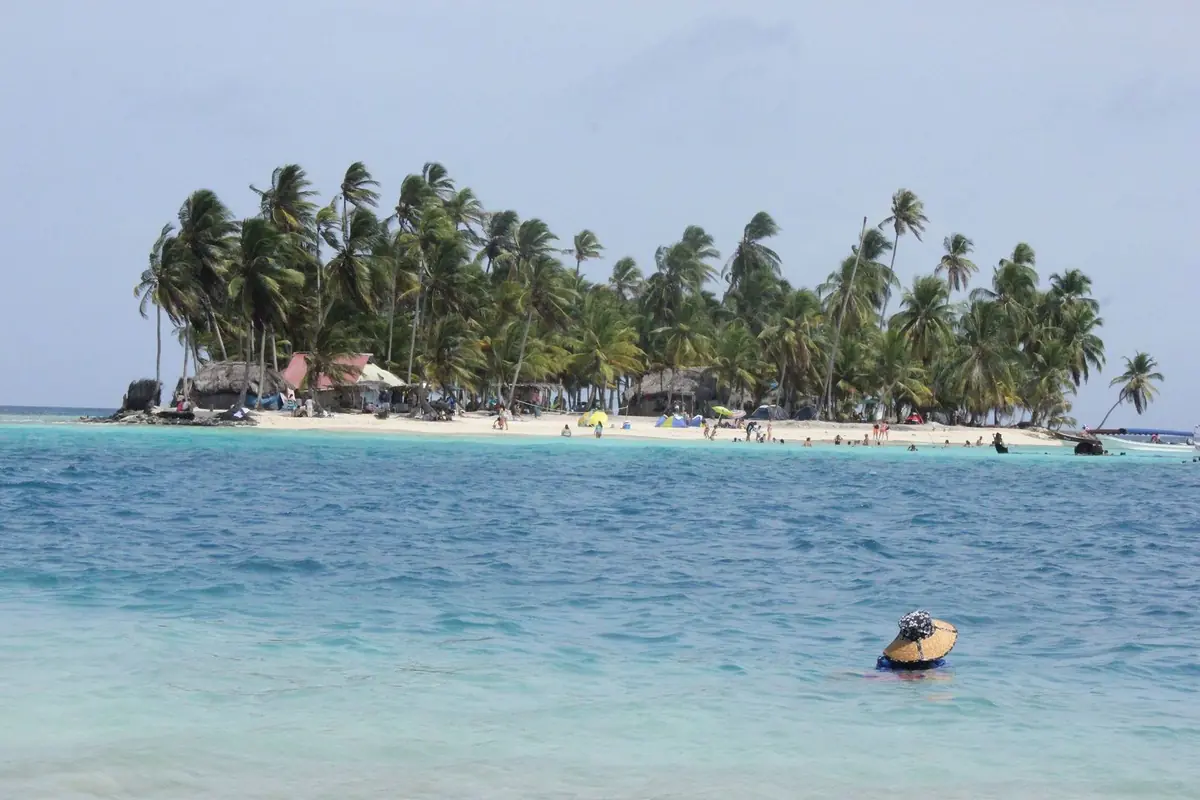
Saona Island
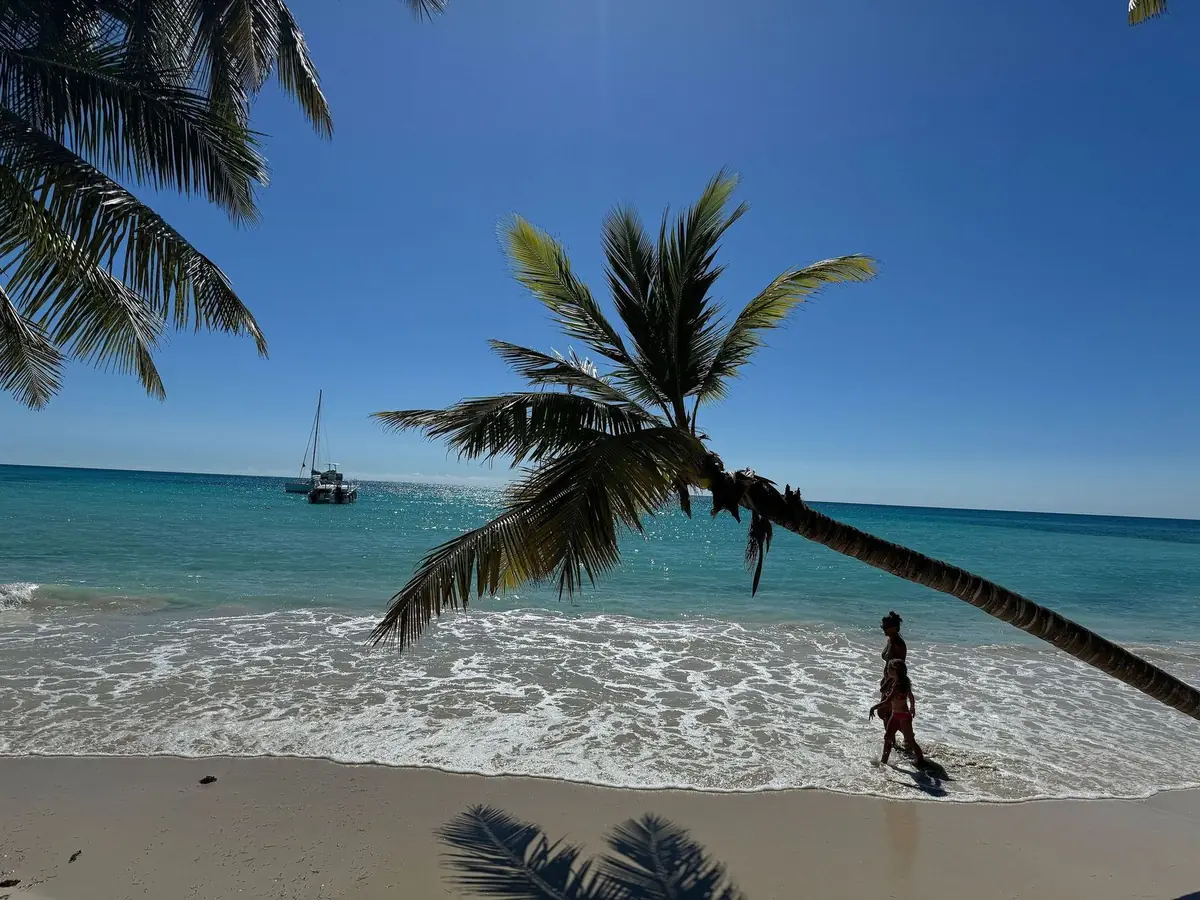
The most visited island in Cotubanamá National Park, formerly called Parque Nacional del Este. Tours arrive by speedboat or catamaran and stop at the natural pool, a sandbar with waist-deep water. Admire the starfish without lifting them out of the water.
-
02
Hoyo Azul at Scape Park
A turquoise cenote (a natural sinkhole pool) ringed by tropical greenery, inside Scape Park in Cap Cana, about 5 km (3 mi) from Juanillo Beach. The park is open 9 a.m. to 5 p.m.; arrive early to swim with fewer people around.
-
03
Macao Beach
A public beach facing the Atlantic, north of Bávaro, with golden sand and steady waves. Surf schools run beginner lessons and kiosks serve seafood. It's the best way to see the coast beyond the resort circuit.
-
04
Catalina Island
An uninhabited natural monument off La Romana, about 9 km² (3.5 sq mi). The real draw is underwater: the Wall, a coral face that drops in steps toward the seabed. The shallow top suits snorkelers; the deep section is for certified divers.
-
05
Santo Domingo's Colonial Zone
A UNESCO World Heritage Site since 1990. Walk Calle Las Damas, dating from 1502, and visit the Cathedral of Santa María la Menor, the first in the Americas, plus the Alcázar de Colón and the Ozama Fortress. It's just over two hours away via the Autopista del Coral.
-
06
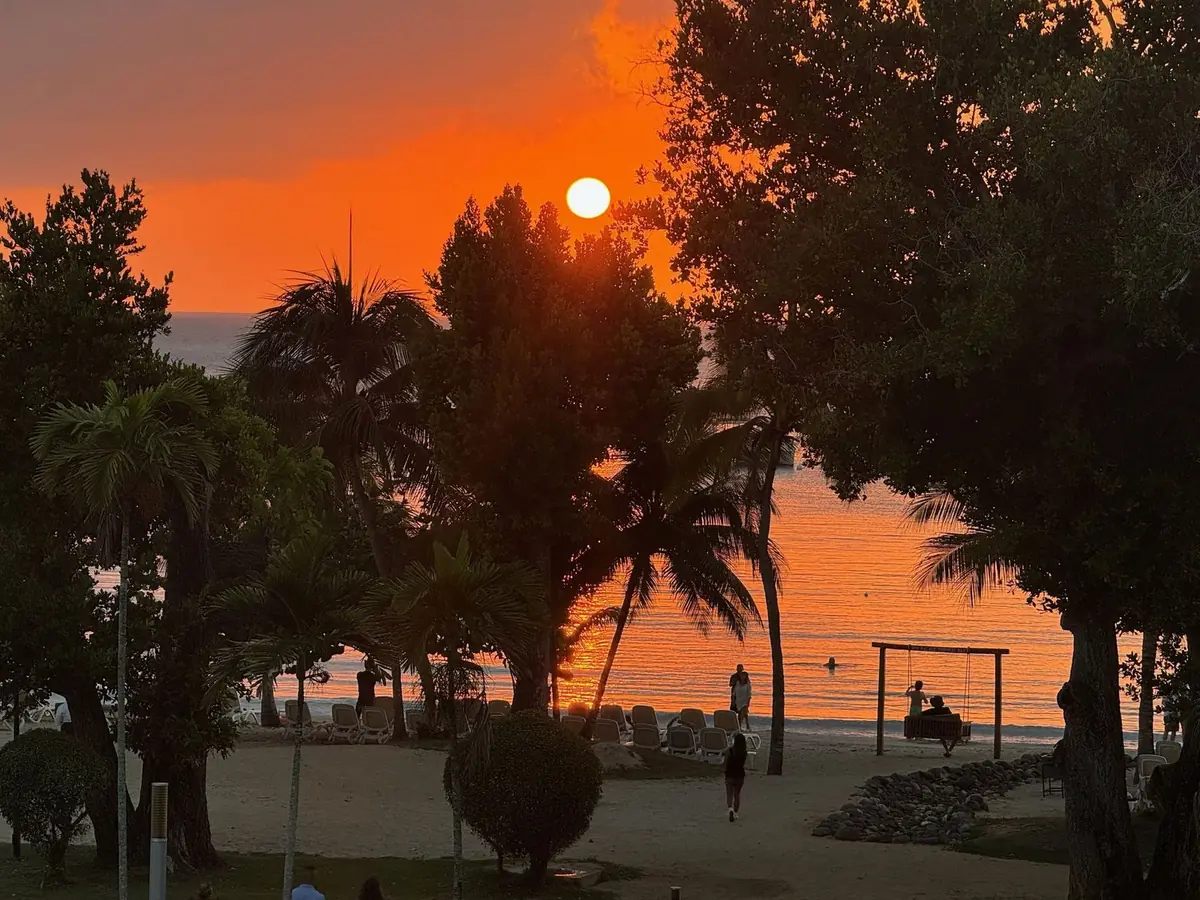
Bávaro Beach, early
Walk Bávaro Beach first thing in the morning, before the sun bites and while the sea is usually calm. It's the best time for photos and an easy swim. In sargassum (seaweed) season, ask your hotel which stretch they're cleaning.
When to go
The best time is December to April: it's the driest season, the heat is easier to handle and sargassum seaweed is usually at its lowest. From May to November it rains more, and the Atlantic hurricane season runs June 1 – November 30, peaking from mid-August to mid-October (NOAA). Sargassum peaks in June and July, and 2026 has been a heavy year.
- Jan: Best. Dry, cooler, little sargassum
- Feb: Best. Dry, sunny, calm seas
- Mar: Best. Driest month; book Holy Week early
- Apr: Best. Last dry month; some sargassum appears
- May: Rainy. First rainy peak, more sargassum
- Jun: Good. Hurricane season starts; heavy sargassum
- Jul: Good. Intense heat, sargassum at its peak
- Aug: Rainy. Hottest month; hurricane peak begins
- Sep: Avoid. Hurricane peak and wettest month
- Oct: Rainy. Still peak hurricane season
- Nov: Good. Rainy, but sargassum and risk ease
- Dec: Best. Dry again; holidays book up fast
-
Best
Dec – Apr
The best time to go.
-
Good
Jun – Jul · Nov
A good time, with a catch on weather or crowds.
-
Rainy
May · Aug · Oct
More rain: keep plans flexible.
-
Avoid
Sep
Hurricane peak and wettest month.
What you need to travel
For Colombian passport holders: no visa has been required for tourist travel to the Dominican Republic since May 15, 2015. You need your passport, the e-Ticket form and the tourist card, which is already included in your airfare. The initial authorized stay is 30 days. Traveling on another passport? Requirements differ, so message us and we'll check yours.
Checked in September 2026 with Dominican Republic Ministry of Tourism: entry requirements. Rules change, so we confirm what applies to you when you book.
- Valid Colombian passport. The general rule calls for 6 months of validity, but under a temporary exception (December 1, 2024 – December 31, 2026), Colombians entering as tourists are accepted with a passport that's valid for their entire stay.
- No tourist visa: the exemption no longer depends on holding a US, Canadian, UK or Schengen visa, as it did before 2015.
- Tourist card (USD 10), included in every airline ticket issued outside the Dominican Republic since April 25, 2018. It's good for a single entry and a stay of up to 30 days.
- e-Ticket electronic form, free and mandatory for both entering and leaving the country, at eticket.migracion.gob.do. You no longer have to complete it 72 hours ahead: just do it before you check in at the airport.
- Departure tax of USD 20, included in your airfare.
- Stays longer than 30 days require a paid extension; the fee depends on your total time in the country.
Take the full guide with you
Entry requirements, best months, local tips and our favorite places to eat in Punta Cana, in a PDF you can keep on your phone.
Bokana tips
What we've learned running trips, and what we'd tell a friend before they go.
-
A stress-free e-Ticket
Fill it out for free at eticket.migracion.gob.do before you head to the airport; it covers both entry and exit. Have your flight number and your hotel's exact address handy. Don't pay third-party sites to do it.
-
The tip is already on the bill
At restaurants and bars with table service, the law adds a 10% tip plus 18% ITBIS (sales tax). Anything extra is optional; check the bill so you don't tip twice.
-
Dollars and pesos
Bring dollars for excursions and hotel tips, and change some into pesos at licensed exchange houses, never on the street. ATMs charge a fee per withdrawal, so make fewer withdrawals.
-
A plan B for sargassum
Between May and September, ask your hotel which stretch of beach they clean daily and keep a few excursions up your sleeve. The University of South Florida publishes a monthly sargassum outlook for the Caribbean.
-
Santo Domingo in a day
Leave early: it's just over two hours via the Autopista del Coral. The Colonial Zone is best explored on foot, so bring comfortable shoes, water and a hat; the midday heat hits hard.
-
Serious heat
From June to October, highs hover around 31 to 32 °C (88 to 90 °F). Stay hydrated, wear a hat and broad-spectrum mineral sunscreen, and reapply every time you get out of the water.
-
Hurricane season
If you're traveling between June and November, buy travel insurance with cancellation coverage and follow the NOAA National Hurricane Center's advisories in the days before your trip.
What to eat
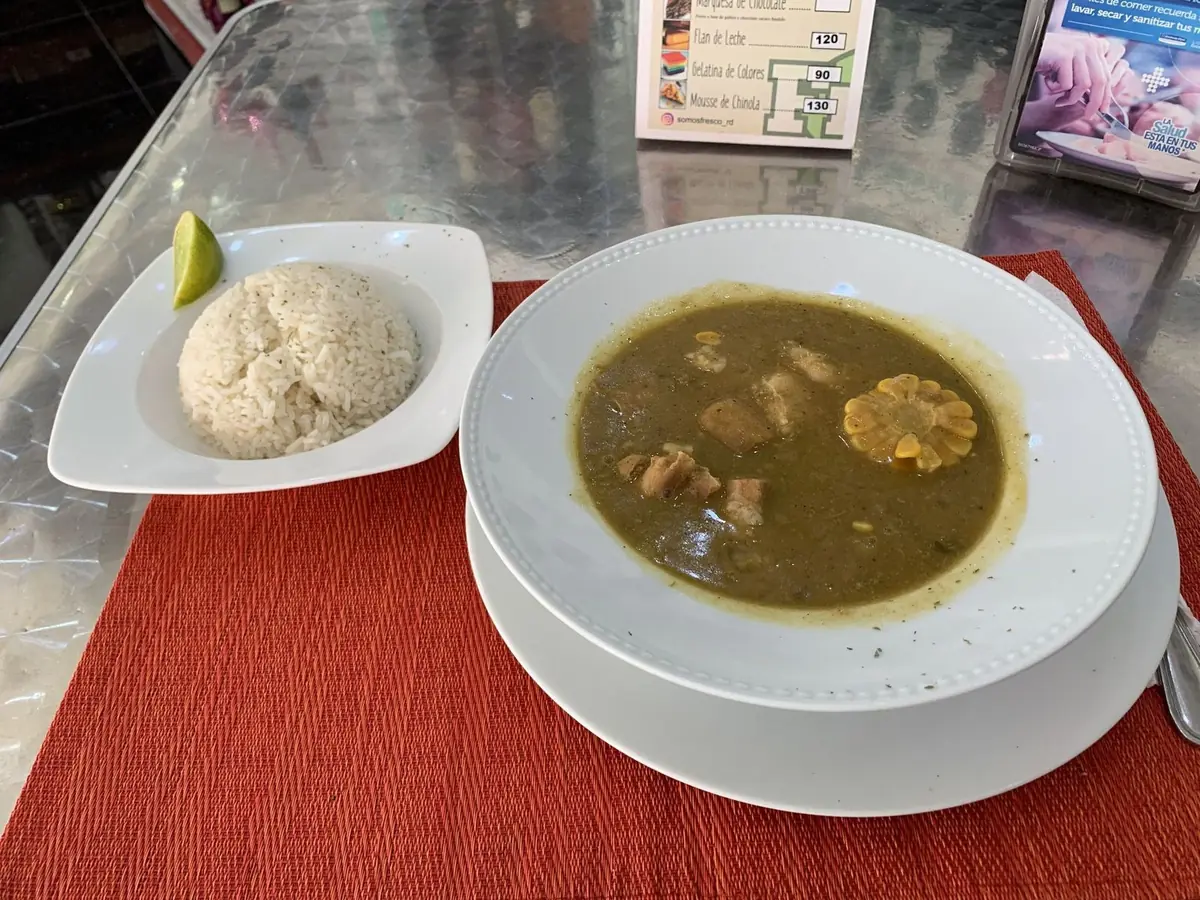
La bandera
White rice, stewed beans and meat, almost always with a salad. It's the everyday Dominican lunch; try it at a comedor, a casual local eatery.
Mangú con los tres golpes
Mashed green plantain topped with pickled red onion, served at breakfast with "the three hits": fried cheese, salami and egg.
Sancocho dominicano
A thick stew of several meats with cassava, yam, plantain and squash, served with white rice and avocado.
Pescado frito con tostones
Whole fried fish with tostones (twice-fried green plantain), found at beachfront kiosks like the ones at Macao.
Group trips to Punta Cana
Book your own spot, travel with a group, and have someone from Bokana with you the whole way.
Picture yourself in Punta Cana?
Let's plan it together.
Join one of our groups or bring your own people on a private trip.
More destinations in the Caribbean
Sources and photo credits
- Cancillería de Colombia: lista de países que exigen visa a colombianos (actualización 12 de agosto de 2024)
- Ministerio de Turismo RD (Go Dominican Republic): requisitos de entrada
- DGII República Dominicana: sobre la tarjeta de turista
- Dirección General de Migración: servicio e-Ticket
- Consulado dominicano: listado de países y condiciones de visado
- El Tiempo (8 de mayo de 2015): República Dominicana ya no exigirá visa a los colombianos
- Migración Colombia: requisitos de entrada y salida del país
- KAYAK: ruta Bogotá-Punta Cana
- Wikipedia: Aeropuerto Internacional de Punta Cana (aerolíneas y destinos)
- El Tiempo: Arajet abrió ruta directa Punta Cana-Medellín
- El Colombiano (14 de septiembre de 2026): crecimiento de Arajet entre Colombia y RD
- Valora Analitik: JetSMART lanza vuelos directos a Punta Cana desde Medellín y Cali
- NOAA National Hurricane Center: climatología de la temporada
- Wikipedia: Punta Cana (tabla climática con datos NOAA 1991-2020)
- USF Optical Oceanography Lab: Sargassum Watch y boletín de agosto de 2026
- Revista Mercado: estado del sargazo en Punta Cana, julio de 2026
- Hoy (RD): propina legal, cuándo pagarla
- Scape Park Cap Cana: Hoyo Azul
- Wikipedia: Parque Nacional Cotubanamá
- Diario Libre: Parque Nacional Cotubanamá, turismo y conservación
- Wikipedia: Isla Catalina (República Dominicana)
- Wikipedia: Ciudad Colonial de Santo Domingo
- Rome2rio: Punta Cana a Santo Domingo
- Plughopper: enchufes en República Dominicana
- Wikimedia Commons (imágenes)
- Revista Mercado: Los 8 mejores restaurantes de Punta Cana en 2026 (11 mar. 2026)
- Wanderlog: los mejores restaurantes de Bávaro (calificaciones de Google)
- Wanderlog: El Rincón del Marisco
- Wanderlog: Herman 311
- Wanderlog: La Palapa by Eden Roc
- TripAdvisor: El Rincón del Marisco
- TripAdvisor: Jellyfish Beach Restaurant
- TripAdvisor: Capitán Cook
- TripAdvisor: Pearl Beach Club & Restaurante
- TripAdvisor: La Palapa by Eden Roc
- Everything Punta Cana: 30 mejores restaurantes (act. 30 sep. 2026)
- Grand Bay: guía de Cabeza de Toro (act. 22 sep. 2026)
Photos: Joe deSousa (CC0), Wikimedia Commons (main photo) · Oleg Yunakov (CC BY-SA 4.0), Wikimedia Commons · Oleg Yunakov (CC BY-SA 4.0), Wikimedia Commons · Desox7x (CC0), Wikimedia Commons · LittleT889 (CC BY-SA 4.0), Wikimedia Commons.