
Curaçao
A UNESCO World Heritage capital, dozens of cliff-framed coves and first-rate diving, about a two-hour flight away, with no visa for Colombians.
- Where it is
- Southern Caribbean, about 65 km (40 mi) north of Venezuela; an autonomous country within the Kingdom of the Netherlands. Capital: Willemstad.
- Getting there
- Direct from Bogotá in about 1 h 55 min (Avianca, plus seasonal Wingo flights). From Medellín, direct flights of about 2 hours with Wingo or EZ Air, a few times a week.
- Weather
- Warm and dry: highs of 28 to 32 °C (82 to 90 °F), nights of 24 to 26 °C (75 to 79 °F), sea at 26 to 28 °C (79 to 82 °F) and 500 to 600 mm (20 to 24 in) of rain a year, mostly from October to January.
- Documents
- No visa: valid passport issued less than 10 years ago, free Digital Immigration Card, onward ticket, accommodation, proof of funds and yellow fever vaccination.
- Money
- Caribbean guilder (Cg, code XCG), which replaced the Antillean guilder on March 31, 2025; pegged at Cg 1.79 per dollar officially and 1.82 in shops. US dollars are accepted across the island; change comes in guilders.
- Language
- Papiamentu, Dutch and English are official; Spanish is widely understood and spoken.
- Time zone
- One hour ahead of Colombia (UTC-4, no daylight saving time).
- Plugs
- Types A and B, same as Colombia; 110 to 130 V but at 50 Hz. Some hotels have European-style 220 V outlets.
Curaçao: colorful facades, crystal-clear coves
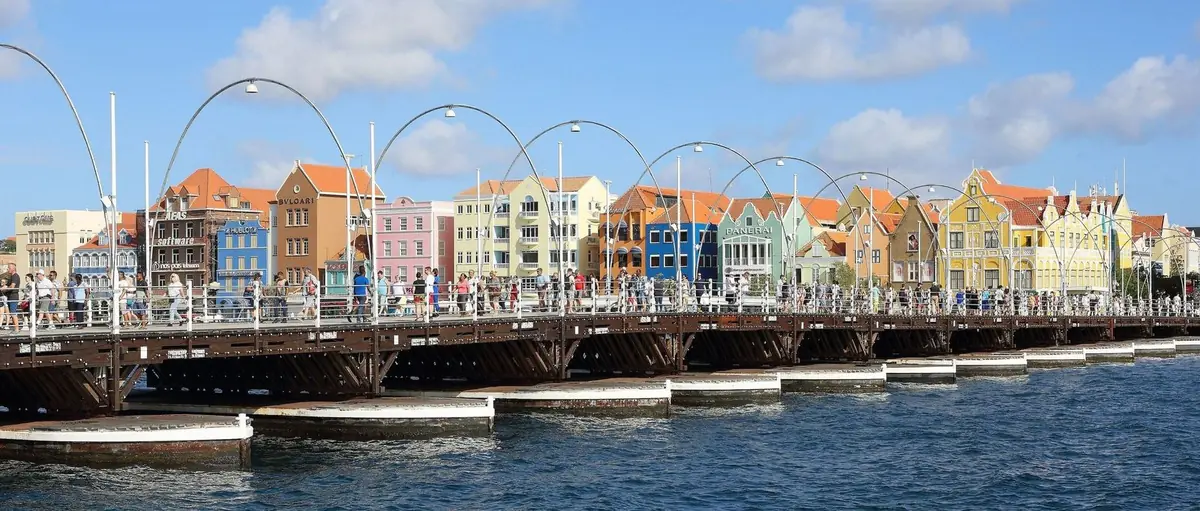
Curaçao is the largest of the ABC islands and an autonomous country within the Kingdom of the Netherlands. Willemstad, the capital, looks like a Dutch harbor painted in Caribbean colors: its Punda and Otrobanda districts face each other across St. Anna Bay, linked by a floating bridge that swings open to let ships through.
Outside the city, the island changes pace. The west hides white-sand coves tucked between rocks, reefs a few meters from shore and turtles that swim up to the fishermen. The north is wild, with waves crashing against limestone. You can drive it all in a few hours, with dry weather and without the usual hurricane threat.
Don't miss
-
01
Willemstad and the Handelskade
The historic center, a UNESCO World Heritage Site since 1997, spans four districts: Punda, Otrobanda, Scharloo and Pietermaai. The colorful houses of the Handelskade are the island's postcard, and Punda is home to the oldest surviving synagogue in the Americas.
-
02
Queen Emma Bridge
A pedestrian bridge floating on pontoons that links Punda with Otrobanda. When a ship approaches, an operator swings it against the shore with motors in a few minutes. Cross it at nightfall, when its lights come on.
-
03
Playa Kenepa Grandi (Grote Knip)
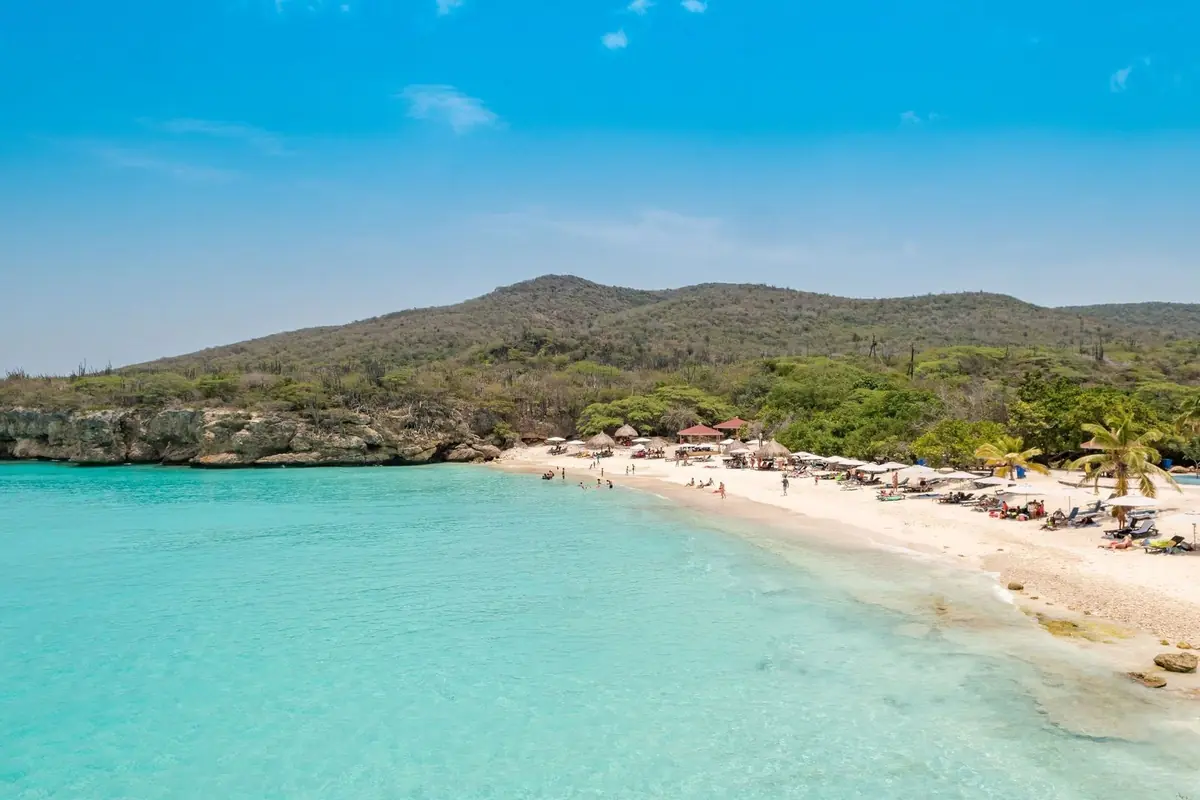
Curaçao's most photographed cove: turquoise water, white sand and cactus-covered hills. It's public and free, with free parking. Arrive early to get shade, and climb to the lookout at the entrance before heading down.
-
04
Klein Curaçao
An uninhabited 1.7 km² (0.66 sq mi) islet about 10 km (6 mi) southeast, with an abandoned lighthouse, shipwreck remains and a reef full of turtles. You get there on a full-day trip, with about two hours of sailing each way.
-
05
Christoffel and Shete Boka
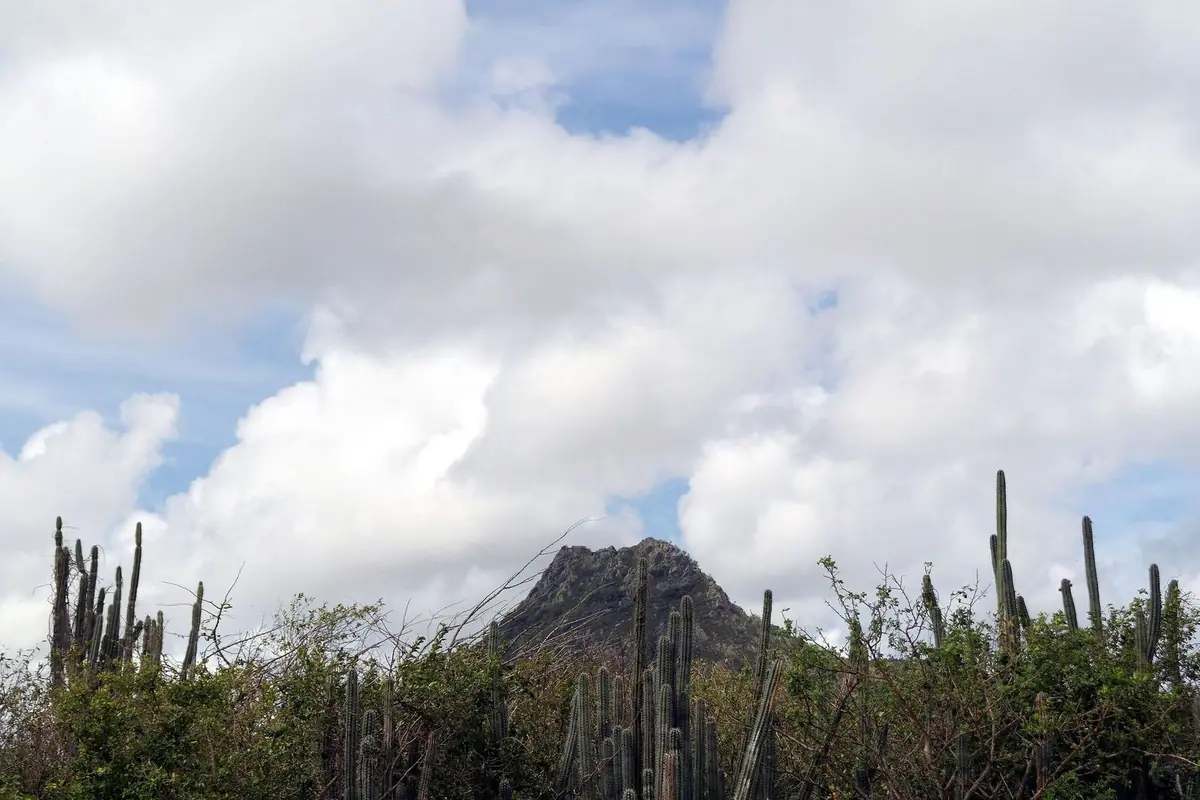
Climb the 372 m (1,220 ft) Christoffelberg, the island's highest point; the trail closes at 10 a.m. because of the heat. Then head to Shete Boka, where waves roar into the Boka Tabla cave.
-
06
Playa Piskado and the west coast
At this fishermen's beach near Westpunt, green turtles swim close when the boats clean their catch, especially mid-afternoon. Snorkel calmly and don't touch them. For a beach-club scene, go to Mambo or Jan Thiel.
When to go
Curaçao is good year-round. February to June is the driest season, with a steady breeze that takes the edge off the heat. July to September is hotter and the wind drops, so the sea is usually calmer for diving. October to January brings a bit more rain, mostly in short showers. December, January and Colombian school vacations push up airfare and lodging prices.
- Jan: Good. Last short showers, peak season
- Feb: Best. Dry and breezy; Carnival season
- Mar: Best. Dry, cool breeze, pleasant sea
- Apr: Best. Dry and sunny; Holy Week costs more
- May: Best. Dry, fewer visitors, good prices
- Jun: Best. Dry and windy, good sea conditions
- Jul: Good. Hotter, school vacations
- Aug: Good. Less wind, excellent diving
- Sep: Good. Hottest month, calm sea
- Oct: Rainy. Short-shower season begins
- Nov: Rainy. Rainiest month, heavy showers
- Dec: Rainy. Brief showers; year-end gets pricey
-
Best
Feb – Jun
The best time to go.
-
Good
Jan · Jul – Sep
A good time, with a catch on weather or crowds.
-
Rainy
Oct – Dec
More rain: keep plans flexible.
What you need to travel
For Colombian passport holders: no visa is required for tourism in Curaçao since July 1, 2015. You can stay up to 30 consecutive days and a maximum of 90 days in any 365-day period. Filling out the Digital Immigration Card before you travel is mandatory. Traveling on another passport? Requirements differ, so message us and we'll check yours.
Checked in September 2026 with Curaçao Tourist Board: travel requirements for Curaçao. Rules change, so we confirm what applies to you when you book.
- Colombian passport issued less than 10 years ago and valid for your entire stay.
- Digital Immigration Card (DI Card) completed on the official portal dicardcuracao.com within the 7 days before your trip. It's free and mandatory for every foreign traveler, including children.
- Return ticket to Colombia or onward ticket to another country.
- Hotel booking, or a letter of invitation if you're staying with family or friends.
- Proof of funds: about USD 150 per person per day if you stay in a hotel, or USD 100 if you stay with family or friends.
- Yellow fever vaccination for anyone over 9 months old, at least 10 days before arrival, since Colombia is a risk area.
- Medical or travel insurance covering hospitalization, emergencies and repatriation: recommended by the tourist board, not an entry requirement.
Take the full guide with you
Entry requirements, best months, local tips and our favorite places to eat in Curaçao, in a PDF you can keep on your phone.
Bokana tips
What we've learned running trips, and what we'd tell a friend before they go.
-
Skip the DI Card middlemen
The Digital Immigration Card is free at dicardcuracao.com. Many lookalike sites charge for the same form. Fill it out within the 7 days before your flight and keep the PDF or confirmation email on your phone.
-
Rent a car
The best beaches are in the west, far from Willemstad, and public transportation is limited. A small car reaches almost all of them. You drive on the right, and there's no right turn on red.
-
Christoffel at sunrise
Tickets to climb the Christoffelberg are sold only in the morning, and the trail closes at 10 a.m. because of the heat. Start between 6 and 7 a.m., and bring 2 liters (about half a gallon) of water per person and shoes with good grip.
-
Dollars yes, euros no
You can pay in dollars anywhere on the island, usually at 1.82 guilders per dollar, with change in guilders. Euros can only be exchanged at banks. Restaurants and hotels usually add a 10 to 12% service charge.
-
Check your chargers
The outlets are the same as in Colombia, but the current is 50 Hz. Phone and laptop chargers work fine; wall clocks, hair dryers or devices with motors may behave differently.
-
Tap water
Tap water comes from Aqualectra's desalination plants and is safe to drink. Bring a reusable bottle to the western beaches, where there's sometimes nowhere to buy water.
-
Watch your car at the beach
Don't leave valuables visible inside the car at beaches and lookouts. Take only what you need onto the sand, and put everything else in the trunk before you arrive.
What to eat
Keshi yena
A Gouda or Edam cheese stuffed with chicken or beef, olives, raisins and onion, baked until it melts. The signature dish of the Dutch Caribbean.
Stoba di kabritu
A slow-cooked goat stew with local spices, the essential taste of home cooking. Served with funchi or rice.
Funchi
A firm cornmeal side, similar to polenta, served with stews and fish. Fried in slices, it's delicious too.
Laraha liqueur
The original Blue Curaçao is made from the peel of the laraha, a local bitter orange. You can taste it at the distillery in Landhuis Chobolobo.
Group trips to Curaçao
Book your own spot, travel with a group, and have someone from Bokana with you the whole way.
Picture yourself in Curaçao?
Let's plan it together.
Join one of our groups or bring your own people on a private trip.
More destinations in the Caribbean
Sources and photo credits
- Curaçao Tourist Board: requisitos para viajar a Curazao (actualizado el 8 de enero de 2024)
- Curaçao Tourist Board: ¿necesito visa para visitar Curazao?
- Portal oficial de la Digital Immigration Card de Curazao
- Curaçao Tourist Board: cómo llenar la Digital Immigration Card
- Gobierno de los Países Bajos (Netherlands Worldwide): ¿necesito visado para las partes caribeñas del Reino?
- Cancillería de Colombia: Curazao y Sint Maarten no exigirán visa de corta estancia a colombianos
- Cancillería de Colombia: lista de países que exigen visa a colombianos (actualización del 12 de agosto de 2024)
- Curaçao Tourist Board: moneda de Curazao
- Curaçao Tourist Board: ¿se aceptan dólares o euros?
- Curaçao Tourist Board: cargos de servicio y propinas
- Curaçao Tourist Board: enchufes y voltaje
- Curaçao Tourist Board: clima durante el año
- Curaçao Tourist Board: temporada de huracanes
- Curaçao Tourist Board: idioma
- Banco Central de Curazao y Sint Maarten: florín del Caribe
- Wikipedia: florín del Caribe
- Wikipedia: Willemstad (Patrimonio de la Unesco, 1997)
- Wikipedia: Puente Reina Emma
- Wikipedia: Klein Curaçao
- Wikipedia: Aeropuerto Internacional de Curazao (aerolíneas y destinos)
- Wikipedia: huracán Tomas (2010)
- Caribbean Journal: Avianca reanuda vuelos a Aruba y Curazao (4 de enero de 2026)
- Kayak Colombia: vuelos Bogotá a Curazao
- Kayak Colombia: vuelos Medellín a Curazao
- Carmabi: Parque Nacional Shete Boka
- GoingToCuracao: playas Grote Knip y Kleine Knip
- VATupdate: Curazao propone impuesto de entrada de USD 75 (15 de septiembre de 2026)
- National Car Rental Curaçao: consejos para manejar
- TripAdvisor - Old Market Plasa Bieu
- Curaçao Chronicle - Plasa Bieu próxima renovación (abr. 2026)
- Curaçao Chronicle - Fundashon Marshe, mejoras en pausa (ago. 2026)
- Island Life Caribbean - Best Curacao Restaurants (jun. 2026)
- TripAdvisor - Gouverneur de Rouville
- TripAdvisor - Kome
- Kome (web oficial)
- TripAdvisor - Mosa/Caña
- Mosa/Caña (web oficial)
- TripAdvisor - Brisa do Mar
- JT Curaçao - Restaurantes cerca de Jan Thiel
- TripAdvisor - Jaanchie's
- My Curaçao Guide - Jaanchie's
Photos: Martin Falbisoner (CC BY-SA 4.0), Wikimedia Commons (main photo) · dronepicr (CC BY 2.0), Wikimedia Commons · René Bongard (CC BY-SA 3.0), Wikimedia Commons · Boris Kasimov (CC BY 2.0), Wikimedia Commons.