
Bahía Solano
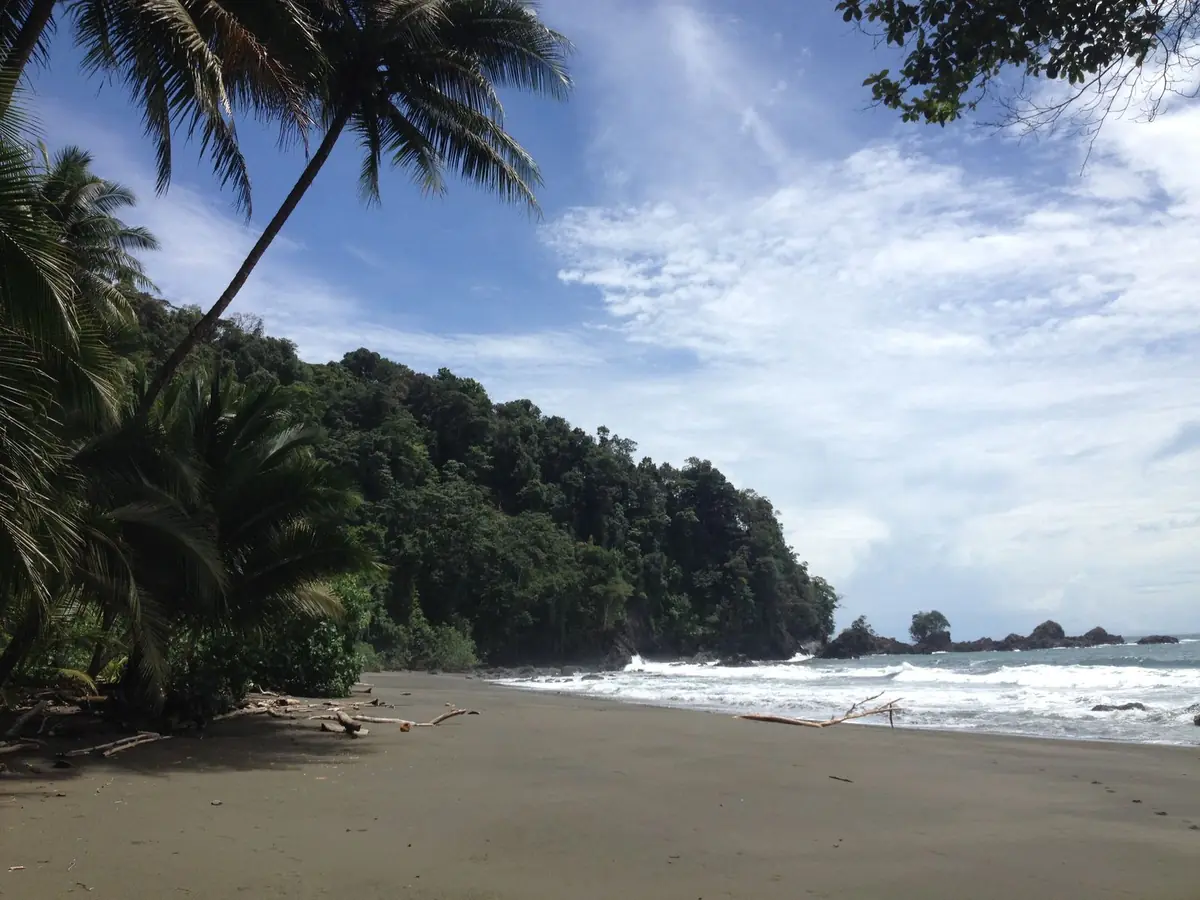
A one-hour flight from Medellín drops you between jungle and ocean: humpback whales from June to October, baby turtles heading to sea and the cove of Utría.
- Where it is
- Northern Pacific coast, department of Chocó. The airport is in Ciudad Mutis, the town center; El Valle is 18 km (11 mi) away by road, about 40 minutes.
- Getting there
- Medellín (Olaya Herrera airport) to Bahía Solano: about 1 hr, on Satena and Clic. There's no road link to the interior of the country.
- Weather
- Warm and very humid year-round, usually 24 to 27 °C (75 to 81 °F). It rains most months; February is the driest and August the wettest.
- Documents
- Colombian ID (cédula) for residents; passport for foreign visitors. For Colombian minors, tarjeta de identidad or registro civil (birth certificate). You also need a yellow fever vaccination card, with the shot given at least 10 days before: it's required to enter Utría.
- Money
- Colombian peso (COP). Bring enough cash from Medellín: don't count on ATMs, and cell signal and internet are limited on the beaches.
- Language
- Spanish. The area is home to Afro-Colombian communities and the Emberá people, who keep their own language.
- Time zone
- Colombia time (UTC-5), no difference.
- Plugs
- Types A and B, 110 V, 60 Hz, same as the rest of Colombia.
Whales, turtles and rainforest on the Pacific
Bahía Solano sits on Colombia's northern Pacific coast, in Chocó, where wet rainforest runs right down to dark-sand beaches. No road connects it to the rest of the country: you fly in, about an hour from Medellín, to José Celestino Mutis airport in the town center. Eighteen kilometers (11 mi) down the road is El Valle, home to El Almejal beach, the Valle River and the turtle programs.
From June to October, humpback whales come to these waters to mate and give birth, and from July to December sea turtles nest on the beaches around El Valle. To the south lies Utría National Natural Park, more than 64,000 hectares (158,000 acres) of mangrove, reef and rainforest on the land of Afro-Colombian communities and the Emberá people. It rains here almost all year, and that's exactly why everything is so green.
Don't miss
-
01
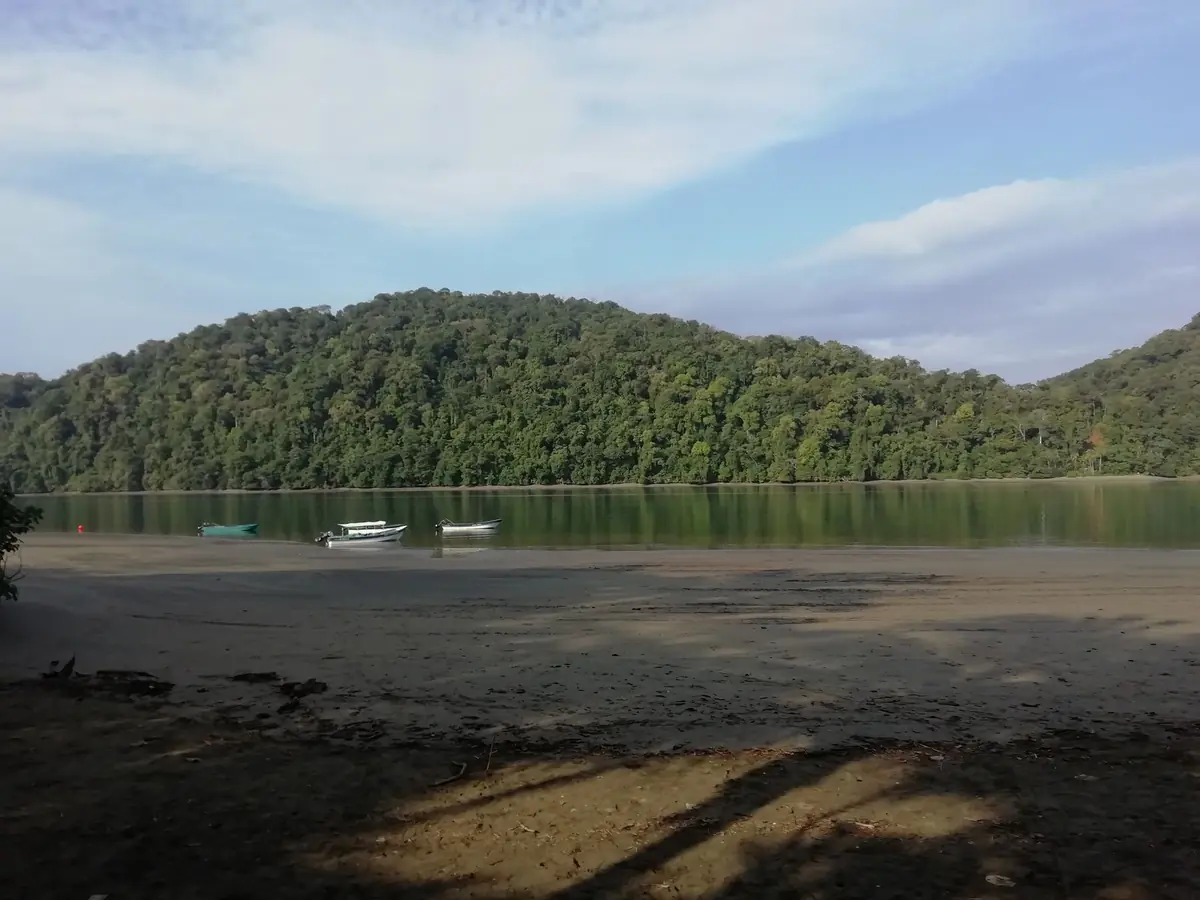
Utría National Natural Park
A cove ringed by rainforest, with mangroves, reefs and trails like Estero Grande and Cocalito. From El Valle it's about 40 minutes by boat or roughly a three-hour hike, always with an authorized local guide.
-
02
Humpback whale watching
From June to October, humpbacks come to the Chocó coast to mate and calve. Boat trips leave from Bahía Solano and El Valle; in 2026, local operators are running the season from June 15 to October 20.
-
03
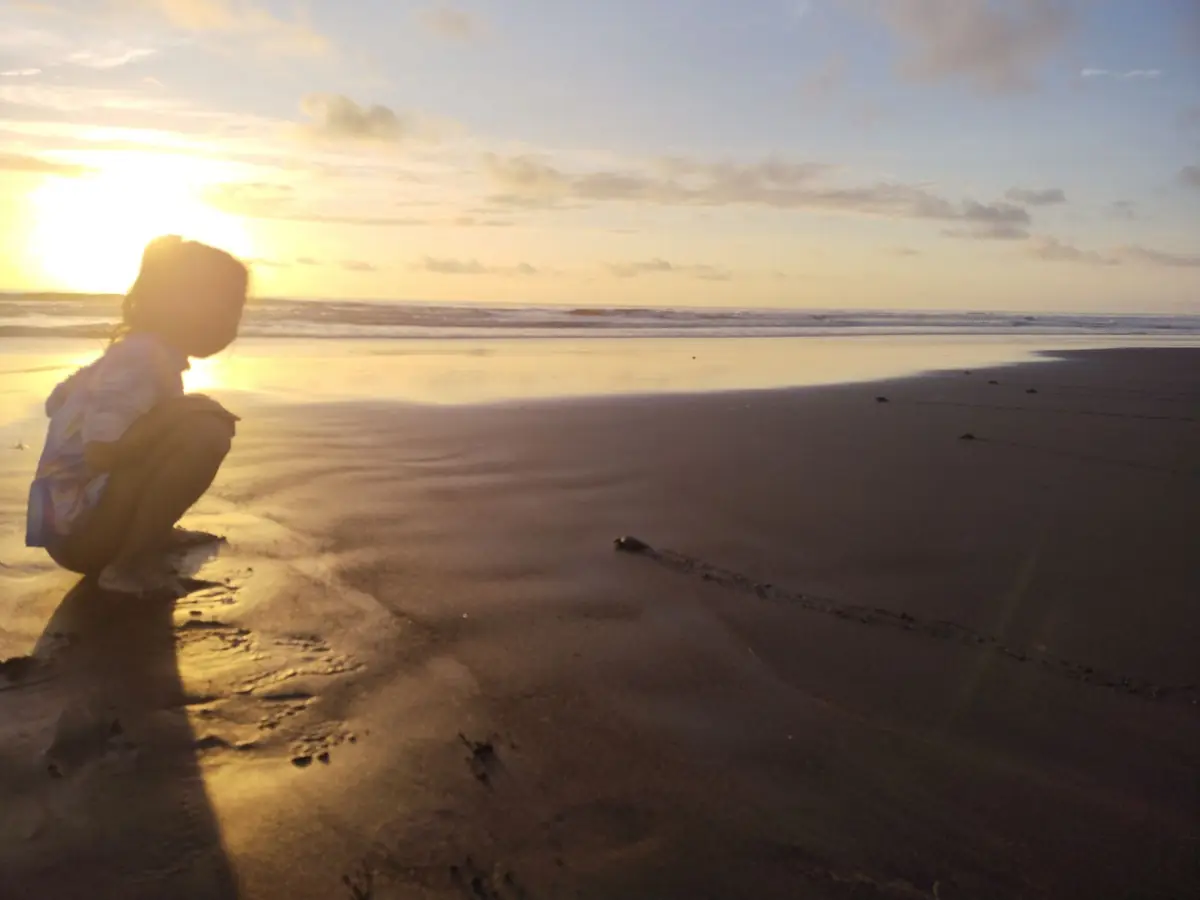
Turtle releases in El Valle
Playa Cuevita, a 9 km (5.6 mi) beach, is one of the most important nesting beaches in the region. From July to December, local projects protect the nests and release the hatchlings into the sea.
-
04
The Valle River and the Chadó falls
The Valle River, the largest in the area, is explored by canoe through the jungle. Twenty-five minutes by boat from El Valle is Playa Chadó: follow the Cascadas River past pools and small falls to the Chadó, which forms a big swimming hole just before it meets the sea.
-
05
Mecana and the Pacific Botanical Garden
Just 3.6 km (2.2 mi) from the airport, a 168-hectare (415-acre) reserve created in 2009 between rainforest and sea. Go for hikes, birdwatching and kayaking through the mangroves and up the Mecana River.
-
06
Playa Huina
About 25 minutes by boat from Ciudad Mutis, a calm beach where you can spot dolphins and, in season, whales.
When to go
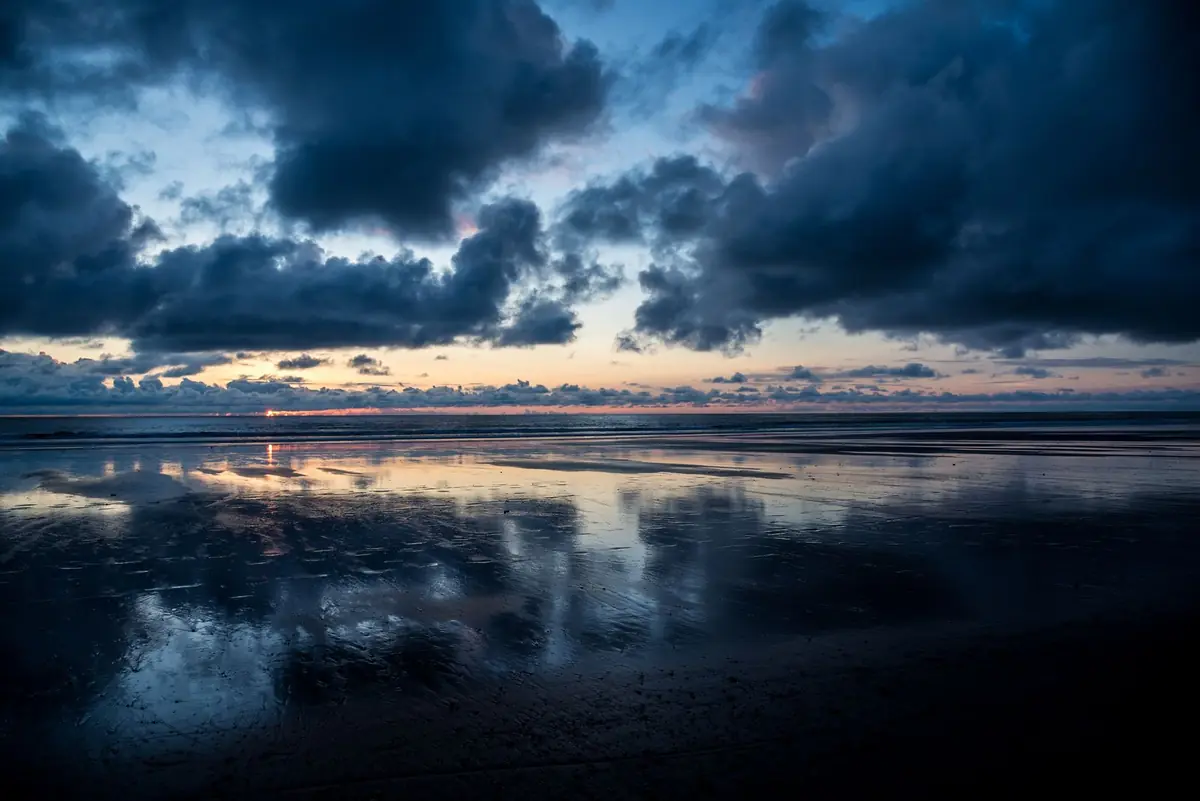
People come to Bahía Solano for the wildlife more than the sun. June to October is humpback whale season, and July to December is turtle nesting and release season. July, August and September give you both, though August is the rainiest month. If you'd rather have less rain for beaches and trails, go from January to March: February is the driest month, but there are no whales.
- Jan: Good. One of the less rainy months; no whales
- Feb: Good. Driest month of the year
- Mar: Good. Little rain, good for beach and forest
- Apr: Rainy. Frequent rain returns
- May: Rainy. Rainy, before the whales arrive
- Jun: Good. Whales arrive mid-month
- Jul: Best. Whales, and turtle season begins
- Aug: Best. Whales and turtles; rainiest month
- Sep: Best. Whales and peak turtle arrivals
- Oct: Good. Last whales; turtles; very rainy
- Nov: Good. Turtle releases; heavy rain
- Dec: Good. Last turtle releases of the season
-
Best
Jul – Sep
The best time to go.
-
Good
Jun · Oct – Mar
A good time, with a catch on weather or crowds.
-
Rainy
Apr – May
More rain: keep plans flexible.
What you need to travel
For Colombian passport holders: you only need your ID to travel to Bahía Solano, but three things must be in order: your yellow fever vaccine, the town's tourism contribution, and the Utría entrance fee if you visit the park. Traveling on another passport? Requirements differ, so message us and we'll check yours.
Checked in October 2026 with Colombian National Natural Parks: Utría National Natural Park. Rules change, so we confirm what applies to you when you book.
- ID: Colombian ID (cédula) for residents; passport for foreign visitors. For Colombian minors, tarjeta de identidad or registro civil (birth certificate).
- Yellow fever vaccine given at least 10 days before, with a valid vaccination card. Colombia's National Parks have required it to enter Utría since May 2025 (Ministry of Health Resolution 691 of 2025), and Chocó is one of the risk areas where the Ministry of Health asks travelers to get vaccinated. Some travel packages also require it. You can check your record at mivacuna.sispro.gov.co.
- Bahía Solano Tourism Contribution: under the town's revenue code (Agreement 04 of 2018), tourists arriving through the airport pay one day's minimum wage per person, about COP 58,400 in 2026. Residents are exempt. Tour operators quote different amounts, so confirm the current figure before you travel.
- 2026 Utría entrance fees for Colombians and residents: COP 28,000 for adults and COP 19,000 for ages 6 to 25.
- In Utría, an authorized local guide or interpreter is mandatory, there's a short orientation talk before entering, and entry and exit hours are 8 a.m. to 2 p.m.
- No single-use plastics allowed in the park. National Parks recommends rubber boots on the trails and buying accident insurance.
Take the full guide with you
Entry requirements, best months, local tips and our favorite places to eat in Bahía Solano, in a PDF you can keep on your phone.
Bokana tips
What we've learned running trips, and what we'd tell a friend before they go.
-
Get vaccinated early
Your yellow fever shot needs to be given at least 10 days before you travel. It's free at vaccination sites across Colombia; bring your card or make sure you show up in the official registry.
-
Cash and a digital detox
Don't count on ATMs, and many places take cash only. Withdraw it in Medellín. Signal on the beaches is weak, so download maps and bookings before you go.
-
Pack for rain
It rains almost all year. Bring a rain jacket, quick-dry clothes, bug spray and dry bags for your phone. For the trails in Utría, rubber boots.
-
Utría: early and with a guide
The park admits visitors from 8 a.m. to 2 p.m., and only with an authorized local guide. Leave El Valle early so you can enjoy the cove and the trails without rushing.
-
Build in a buffer day
Airlines warn that schedules and frequencies can change for operational reasons. Don't book an important connection on the same day you fly back.
-
Respect the wildlife
At turtle releases, don't use flash or touch the hatchlings, and follow the instructions of the people who care for the nests. For whale watching, pick licensed local operators who keep their distance and don't chase the animals.
-
Check the security situation
In May 2025 the ELN guerrilla called an armed strike in Chocó. Before you go, check conditions with your agency and official channels, and travel with licensed operators.
What to eat
Pescado encocado
Catch of the day simmered in coconut milk. It's one of the signature flavors of Pacific cooking.
Arroz de piangua
Rice with piangua, a small clam gathered in the mangroves. You'll also find it in empanadas.
Borojó juice
A thick, tart fruit native to Chocó, served as juice, blended with milk or as ice cream. Try it in El Valle.
Tamal chocoano
The Chocó take on the tamal, one of the region's classic dishes. Look for it at home-style breakfasts.
Group trips to Bahía Solano
Book your own spot, travel with a group, and have someone from Bokana with you the whole way.
Picture yourself in Bahía Solano?
Let's plan it together.
Join one of our groups or bring your own people on a private trip.
More destinations in Colombia
Sources and photo credits
- Parques Nacionales Naturales: PNN Utría (área, tarifas 2026, horario, guías, ballenas, acceso)
- Parques Nacionales Naturales: nuevo requisito de vacunación contra fiebre amarilla (2 may 2025)
- Concejo de Bahía Solano: Acuerdo 04 de 2018, Estatuto de Rentas (Contribución por Turismo, arts. 353 a 356)
- Colombiamove: salario mínimo 2026, valor diario
- El Tiempo: Minsalud exigirá carné de fiebre amarilla para viajes desde y hacia zonas de riesgo (16 abr 2025)
- El Colombiano: Minsalud prioriza grupos para refuerzo de la vacuna de fiebre amarilla (28 ene 2026)
- Colombia Travel (ProColombia): ¿Qué hacer en Bahía Solano?
- Clic: vuelos Medellín a Bahía Solano
- Skyscanner: vuelos Medellín a Bahía Solano
- El Universal: Bahía Solano estrena aeropuerto (26 sep 2026)
- Ecolodge El Almejal: Bahía Solano, qué hacer y cómo llegar
- El Espectador: El Almejal, entre la selva y el océano Pacífico
- Semana: Tortugas del Pacífico, conservación en Bahía Solano
- Colombia País: guía de Bahía Solano y El Valle
- El Tiempo: Bahía Solano, qué hacer y cómo llegar (Chadó, Río Cascadas)
- Jardín Botánico del Pacífico
- Visit My Colombia: Jardín Botánico del Pacífico
- Weather Spark: clima promedio en Bahía Solano
- Infobae: paro armado del ELN en Chocó (3 may 2025)
- Power Plugs & Sockets: Colombia
- Google Maps (fichas consultadas el 4 oct 2026)
- Tripadvisor: restaurantes en El Valle, Bahía Solano
Photos: Tomtomfish (CC BY-SA 4.0), Wikimedia Commons (main photo) · Jorgegutierrezpareja (CC BY-SA 4.0), Wikimedia Commons · MaraPolanco (CC BY-SA 4.0), Wikimedia Commons · Izzy Boscawen (CC0), Wikimedia Commons.