
Tayrona & Santa Marta
Dry forest, white-sand beaches and four Indigenous peoples who care for this land. Tayrona and Santa Marta are best explored on foot, slowly and with respect.
- Where it is
- Caribbean coast, department of Magdalena. The Zaino entrance is 32 km (20 mi), about 45 minutes, from Santa Marta.
- Getting there
- Direct from Bogotá to Santa Marta: about 1 hr 30 min. Direct from Medellín: around 1 hr 20 min. From the airport to the park, add about 45 minutes by road.
- Weather
- Warm year-round, usually 24 to 31 °C (75 to 88 °F). Dry, windy season from December to April; rains from May to November, peaking in October.
- Documents
- Colombian ID (cédula) for residents; passport for foreign visitors. You also need the park's mandatory accident insurance and a yellow fever vaccination card, with the shot given at least 10 days before.
- Money
- Colombian peso (COP). Bring cash into the park: signal is weak and many vendors and campsites don't take cards. Santa Marta has ATMs, and most hotels and restaurants there accept cards.
- Language
- Spanish. The Kogui, Arhuaco, Wiwa and Kankuamo peoples keep their own languages and traditions.
- Time zone
- Colombia time (UTC-5), no difference.
- Plugs
- Types A and B, 110 V, 60 Hz, same as the rest of Colombia.
Where the Sierra Nevada meets the sea
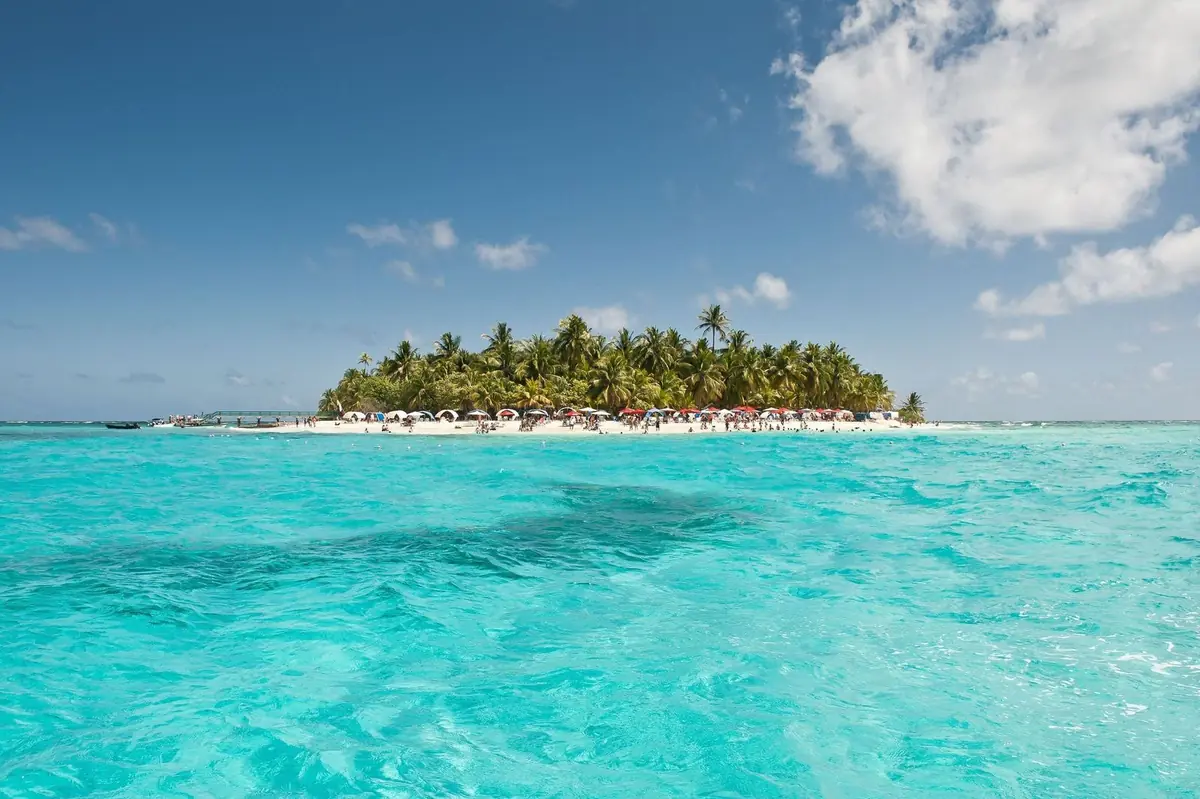
Tayrona National Natural Park protects about 19,300 hectares (47,700 acres) of land and sea northeast of Santa Marta, in the department of Magdalena. Here the Sierra Nevada drops almost straight into the Caribbean, so a single hike takes you from forest to pale-sand beaches, calm bays and open sea with heavy surf. You get around almost entirely on foot, along trails threaded between giant boulders, to coves like Cabo San Juan de Guía and La Piscina.
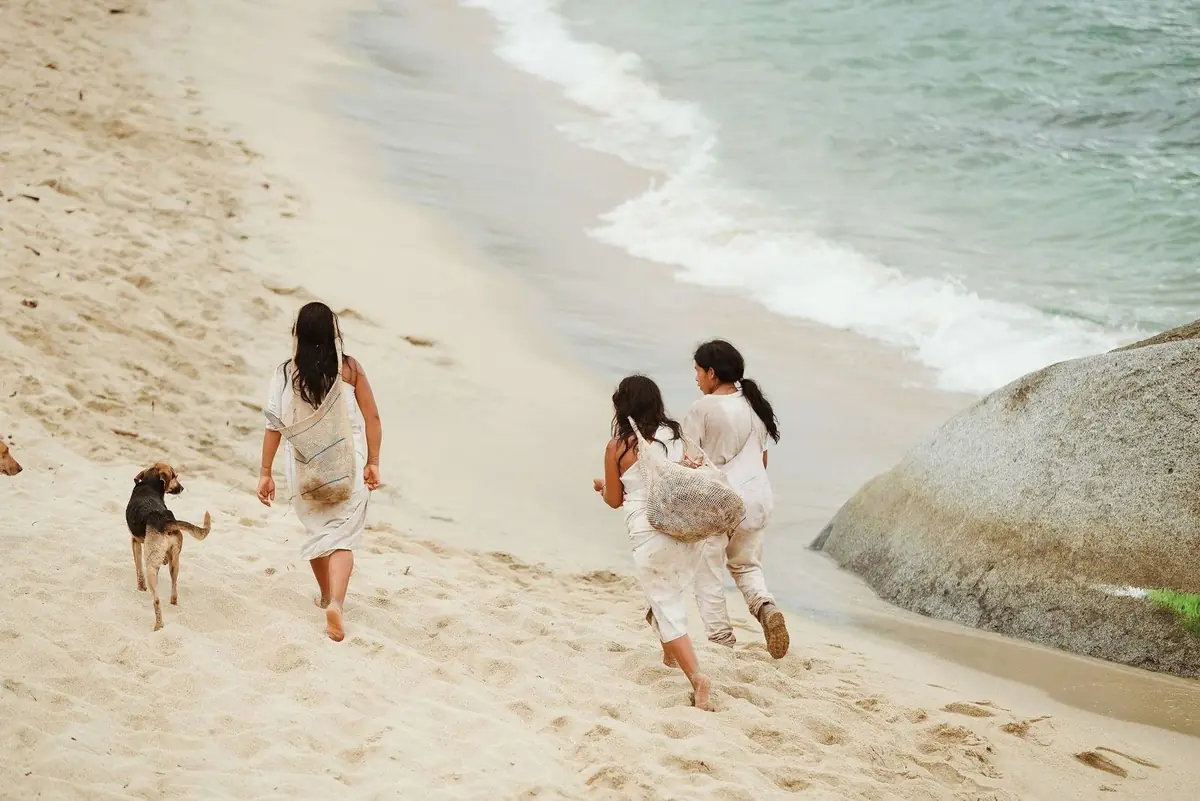
This is more than a park. It's the ancestral territory of the Kogui, Arhuaco, Wiwa and Kankuamo peoples, with 54 sacred sites inside its boundaries. That's why it closes three times a year, so the land can rest and ceremonies can take place. From Santa Marta you can also head up to Minca, among coffee farms and waterfalls, drop down to the fishing bay of Taganga or, with four or five days to spare, hike to Teyuna, Ciudad Perdida (the Lost City).
Don't miss
-
01
Cabo San Juan de Guía
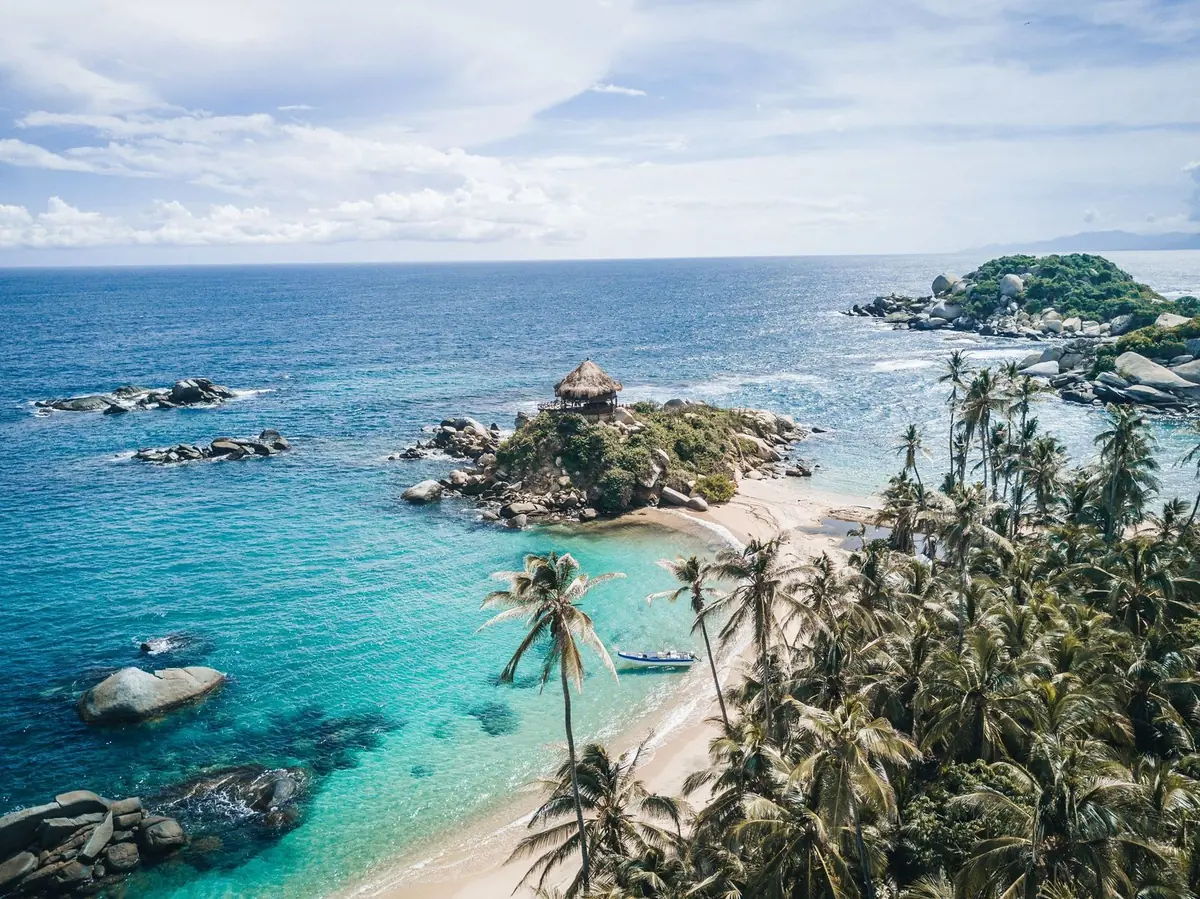
Tayrona's postcard view: two calm coves split by a rocky headland with a thatched lookout on top. You reach it after a few hours' hike from Cañaveral, and it's one of the few spots where swimming is allowed.
-
02
The trail to Arrecifes and La Piscina
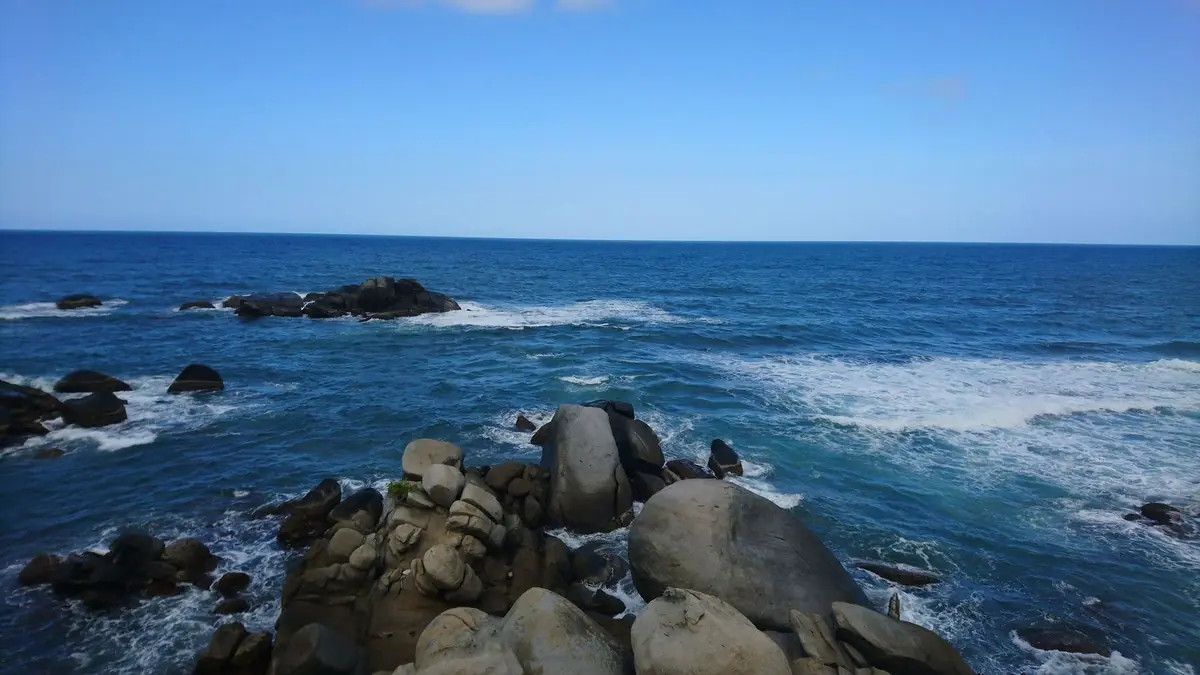
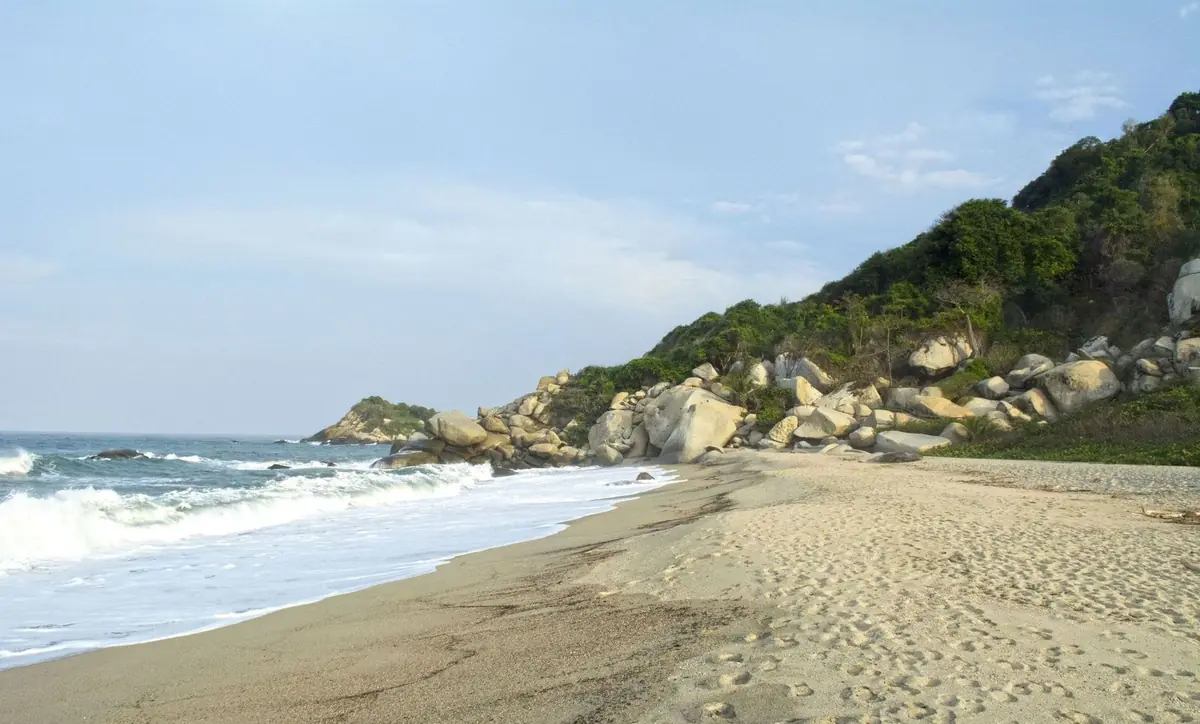
The classic route from Cañaveral crosses forest, boulders and beaches. At Arrecifes the sea is very dangerous and swimming isn't allowed. Save your swim for La Piscina, a bay sheltered by a natural rock barrier.
-
03
Bahía Concha
The part of the park closest to Santa Marta, about 15 minutes by car. A wide, calm bay that works well with kids or for a beach day without long hikes.
-
04
Minca and the Sierra
About 14 km (9 mi) from Santa Marta, among coffee farms, waterfalls like Pozo Azul and Marinka, and one of the country's best-known birdwatching areas. Perfect for a couple of cool nights up in the hills.
-
05
Taganga at sunset
An old fishing village right next to Santa Marta. A good place to eat fish facing the bay, go diving or catch a boat to nearby beaches.
-
06
Teyuna, Ciudad Perdida
An archaeological park run by ICANH, Colombia's institute of anthropology and history, deep in the Sierra Nevada on Indigenous reserve land. The only way in is a guided multi-day trek with an authorized operator. You'll need to be in good shape and confirm closure dates before you book.
When to go
The dry season, December to April, brings clear skies, clearer water and firm trails, but also strong wind and big crowds in December, January and Holy Week. From May to November it rains more, especially from September to November. Plan around the park closures: February 1–15, June 1–15 and October 19 – November 2. March and the second half of February are usually the best combination.
- Jan: Best. Dry and windy; peak season through the 31st
- Feb: Good. Park closed 1–15; very dry afterward
- Mar: Best. Dry, fewer crowds outside Holy Week
- Apr: Good. Dry; Holy Week gets very busy
- May: Good. Rains begin, few visitors
- Jun: Good. Park closed 1–15; high season
- Jul: Good. School holidays, park full; moderate rain
- Aug: Rainy. More frequent rain, humid heat
- Sep: Rainy. Rainy; muddy trails
- Oct: Avoid. Rainiest month; closed from the 19th
- Nov: Rainy. Closed through the 2nd; rainy
- Dec: Best. Dry season returns; book ahead
-
Best
Mar · Dec – Jan
The best time to go.
-
Good
Feb · Apr – Jul
A good time, with a catch on weather or crowds.
-
Rainy
Aug – Sep · Nov
More rain: keep plans flexible.
-
Avoid
Oct
Rainiest month; closed from the 19th.
What you need to travel
For Colombian travelers: Tayrona doesn't require an advance reservation, but you do need ID, your entrance fee, the mandatory insurance and to follow park rules. Check closures and the local security situation on official channels before you go. Traveling on another passport? Requirements differ, so message us and we'll check yours.
Checked in September 2026 with Colombian National Natural Parks: Tayrona National Natural Park. Rules change, so we confirm what applies to you when you book.
- ID: Colombian ID (cédula) for residents; passport for foreign visitors. For Colombian minors, tarjeta de identidad or registro civil (birth certificate).
- 2026 entrance fees (Resolution 551 of 2025) for Colombians and residents: COP 36,500 in low season and COP 43,000 in high season for visitors over 25; COP 27,500 and COP 30,500 for ages 5 to 25. At Bahía Concha: COP 26,000 and COP 15,000.
- Mandatory accident insurance with visitor assistance (Resolution 273 of 2024), bought separately from the entrance fee.
- Yellow fever vaccine given at least 10 days before, with a valid vaccination card: Colombia's National Parks have required it since May 2025 due to the health emergency (Ministry of Health Resolution 691 of 2025). You can check your record at mivacuna.sispro.gov.co.
- 2026 closures: February 1–15, June 1–15 and October 19 – November 2. No ecotourism services operate on those days.
- Not allowed in: single-use plastics (bags, Styrofoam, bottles, cups, cutlery, straws), alcohol, speakers, pets, and drones without a permit.
- Groups of eight or more must enter with a tour guide.
- Hours at the Zaino entrance: entry from 8 a.m. to 5 p.m. in low season; 7 a.m. to 3 p.m. in high season. Calabazo opens at 6 a.m.
Take the full guide with you
Entry requirements, best months, local tips and our favorite places to eat in Tayrona & Santa Marta, in a PDF you can keep on your phone.
Bokana tips
What we've learned running trips, and what we'd tell a friend before they go.
-
Get in early
Arrive at Zaino or Calabazo when it opens. You'll hike in less heat, reach Cabo San Juan before noon and skip the high-season line, when entry closes earlier.
-
Swim only where it's allowed
Respect the flags. Arrecifes and other open-sea beaches have currents that have claimed many lives. Swim in approved areas like La Piscina, Cabo San Juan, Bahía Concha or Cristal.
-
Pack plastic-free
Bags are checked at the entrance. Bring a thermos or reusable bottle, reusable food containers and cloth bags. Single-use plastics stay outside.
-
Cash and a power bank
Signal inside the park is patchy and many spots take cash only. Withdraw money in Santa Marta and bring a fully charged power bank.
-
Pack for two climates
Closed shoes for the trail, sandals for the beach, bug spray and sunscreen. If you're heading to Minca, add a light jacket: it gets cool up there at night.
-
Check the security situation
In February 2026 the park closed over threats to park staff, and in September there was an armed strike in Santa Marta. Before you go, check National Parks' official channels and travel with licensed operators.
-
Give Ciudad Perdida time
The trek takes four to five days and calls for good fitness. Book only with authorized operators and confirm the annual closure, which usually falls in October and is set by Indigenous authorities and ICANH.
What to eat
Cayeye
Santa Marta's breakfast: mashed green banana with hogao (a tomato and onion sauce), butter and queso costeño, a salty fresh cheese. It comes with eggs, meat or chicharrón (fried pork belly).
Fried fish with patacón and coconut rice
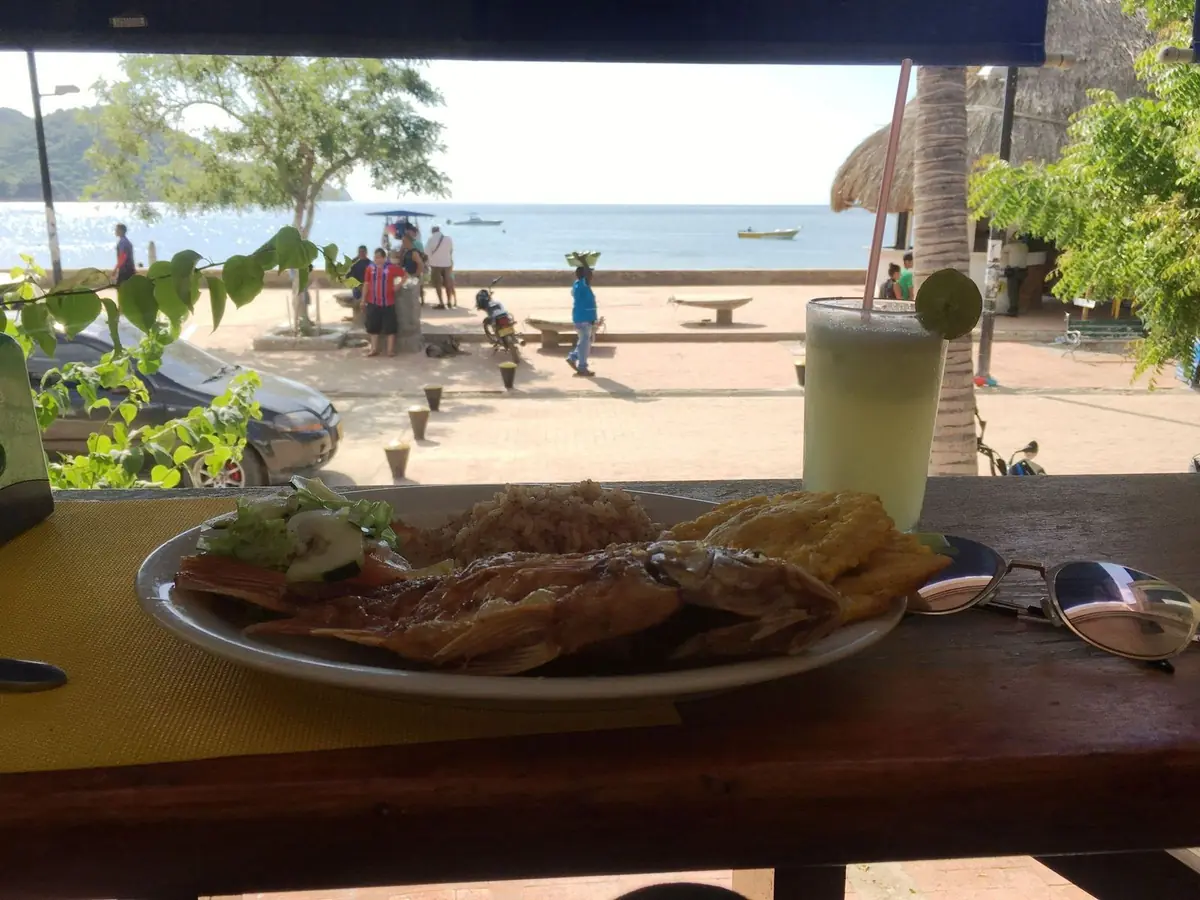
The ultimate beach lunch, best eaten facing the sea in Taganga or El Rodadero, with the catch of the day and patacón (twice-fried green plantain).
Arroz de bonito
A traditional Santa Marta rice dish made with bonito, a Caribbean fish closely tied to the city's cooking.
Sierra coffee
In Minca, many farms open their doors to show you how the beans are processed and pour you a freshly brewed cup.
Group trips to Tayrona & Santa Marta
Book your own spot, travel with a group, and have someone from Bokana with you the whole way.
Picture yourself in Tayrona & Santa Marta?
Let's plan it together.
Join one of our groups or bring your own people on a private trip.
More destinations in Colombia
Sources and photo credits
- Parques Nacionales Naturales: PNN Tayrona (tarifas, horarios, cierres, prohibiciones)
- Parques Nacionales Naturales: Tayrona renueva su energía, primer cierre temporal del 2026 (30 ene 2026)
- Parques Nacionales Naturales: Tayrona inicia periodo de sanación cultural Respira Tayrona (29 may 2026)
- Parques Nacionales Naturales: cierre temporal del Tayrona por seguridad, Resolución 091 (17 feb 2026)
- Parques Nacionales Naturales: misión técnica para posible reapertura sectorizada (25 feb 2026)
- Parques Nacionales Naturales: nuevo requisito de vacunación contra fiebre amarilla (2 may 2025)
- Infobae: tarifas 2026 del Tayrona, Resolución 551 (7 ene 2026)
- Infobae: reapertura del Tayrona el 5 de marzo de 2026
- El Espectador: Parque Tayrona sigue abierto tras el fin del paro armado en Santa Marta (25 sep 2026)
- ICANH: Parque Arqueológico Teyuna
- Infobae: playas de Colombia con restricciones para bañistas (dic 2023)
- Weather Spark: clima promedio en Santa Marta
- Skyscanner: vuelos Bogotá a Santa Marta
- Kayak: vuelos Medellín a Santa Marta
- Semana: Minca, cascadas, cafetales y aves cerca de Santa Marta
- Señal Colombia: platos típicos de Santa Marta
- El Informador: el bonito y el cayeye en la gastronomía samaria
- Power Plugs & Sockets: Colombia
- Google Maps (fichas consultadas el 1 oct 2026)
- Publimetro: 5 restaurantes de comida de mar para visitar en Santa Marta (23 jul 2026)
- Tripadvisor: Guásimo
- Tripadvisor: Lazy Cat Minca
- Tripadvisor: Casa Cocotte Palomino
- Tripadvisor: Mañe Cayón
- Wanderlog: Casa Cocotte Palomino
- Restaurant Guru: Casa Cocotte Palomino
- El Tiempo, blog ¿Para dónde va?: La ruta del cayeye en Santa Marta
Photos: Giancarlos1234 (CC BY-SA 4.0), Wikimedia Commons (main photo) · ROCHY HERNÁNDEZ (CC BY-SA 4.0), Wikimedia Commons · Niop90 (CC BY-SA 4.0), Wikimedia Commons · Kmaromero (CC BY-SA 4.0), Wikimedia Commons · Aponteofficial (CC BY-SA 4.0), Wikimedia Commons.