
Capurganá & Sapzurro
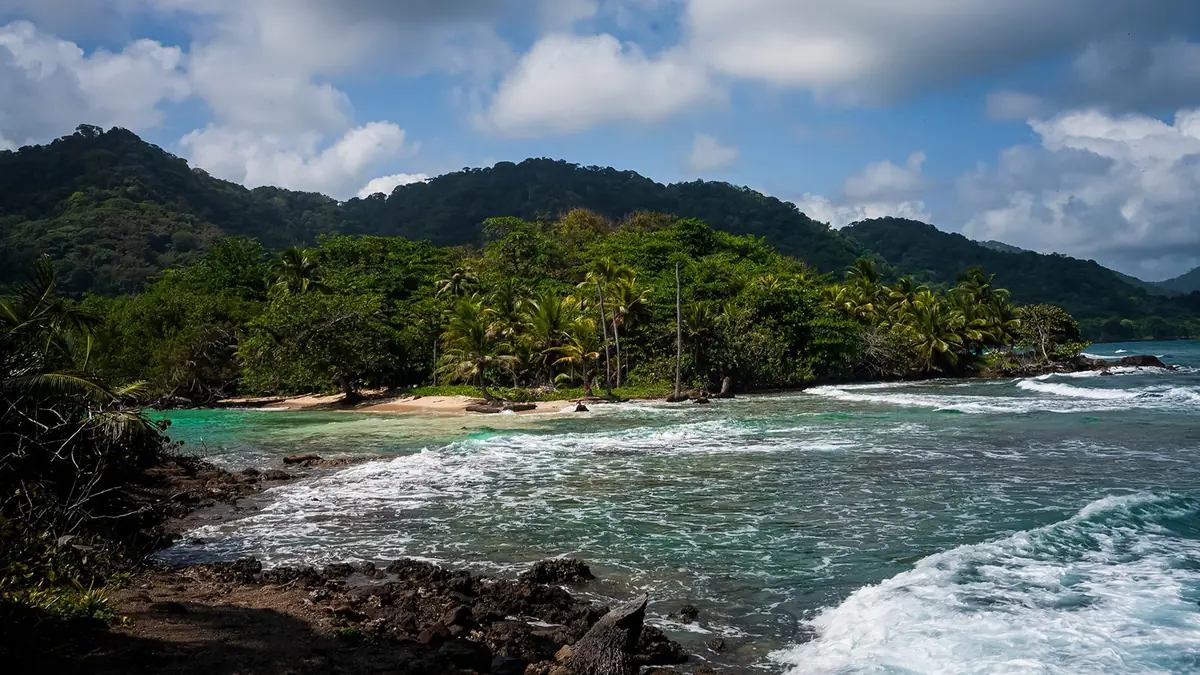
You arrive by small plane or boat and get around on foot: clear bays, jungle trails and a path that crosses into Panama.
- Where it is
- Northern Chocó, municipality of Acandí, on the Gulf of Urabá next to the Panama border. There's no road access.
- Getting there
- Medellín (Olaya Herrera) to Acandí with Satena, Monday to Friday: about 1 hr to 1 hr 20 min, plus a 40-minute boat ride to Capurganá. Clic runs direct Medellín–Capurganá flights of about 1 hr 15 min.
- Weather
- Hot and humid year-round, 24 to 30 °C (75 to 86 °F). About 2,450 mm (96 in) of rain falls each year; February is the driest month and May the wettest.
- Documents
- Colombian ID (cédula) for residents; passport for foreign visitors. To cross into La Miel (Panama), Colombians should bring a valid passport too. A yellow fever shot is recommended, given at least 10 days before.
- Money
- Colombian peso (COP). Bring plenty of cash: most businesses don't take cards and you can't count on ATMs. La Miel accepts pesos too.
- Language
- Spanish. Much of the population is of African descent and organized into community councils.
- Time zone
- Colombia time (UTC-5), no difference. La Miel, in Panama, keeps the same time.
- Plugs
- Types A and B, 110 V, 60 Hz, same as the rest of Colombia.
Darién jungle, Caribbean sea, no cars
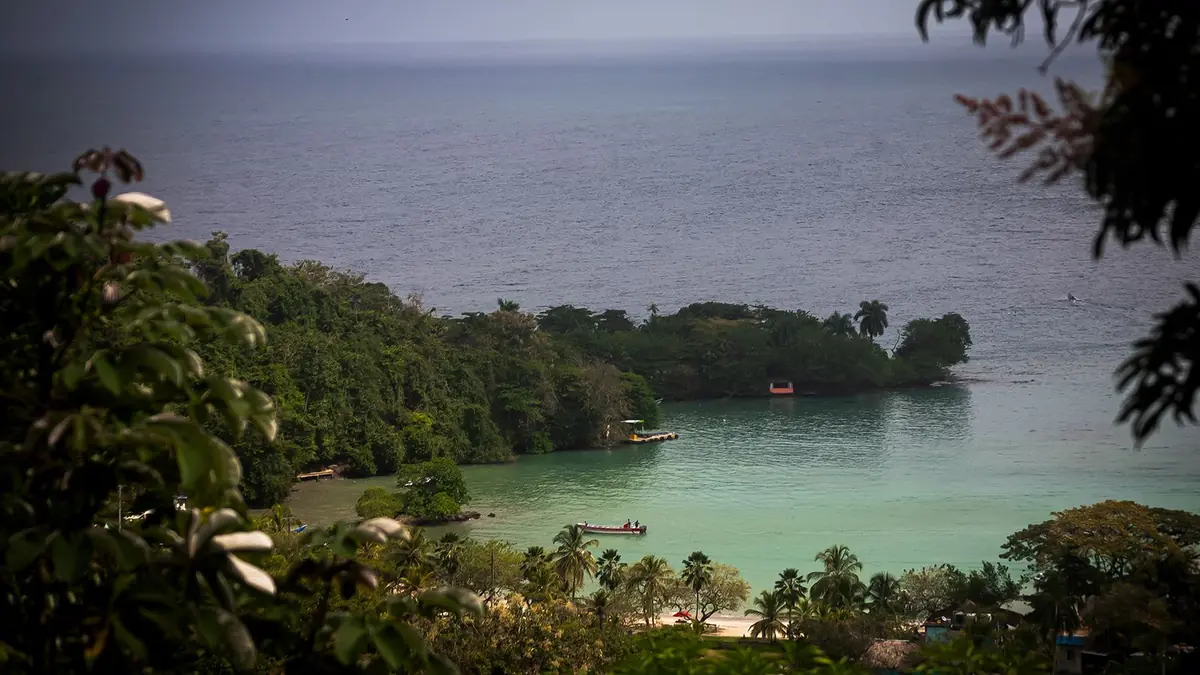
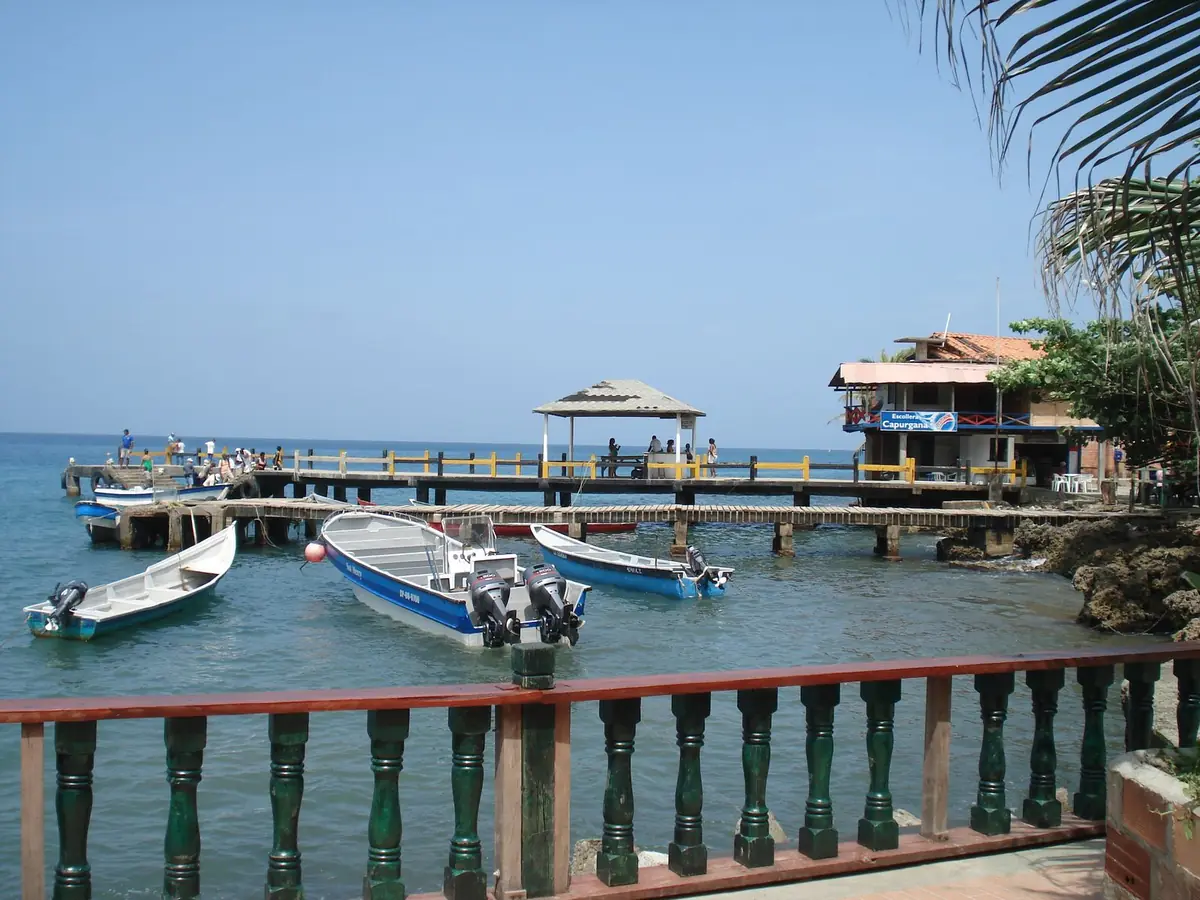
Capurganá is a village in the municipality of Acandí, in northern Chocó, where the Darién jungle runs down to the Gulf of Urabá. No road links it to the rest of Colombia: you arrive by small plane or by boat, and once you're there everything moves on foot or by sea. A few minutes by boat take you to clear-water bays like El Aguacate and Playa Soledad, and trails leave town for waterfalls and freshwater pools.
Ten minutes away by sea is Sapzurro, a smaller, quieter bay. From there a path climbs the border ridge and drops down to La Miel, Panama's first village, with a turquoise beach. This is a trip for switching off: patchy signal, little access to cash and a pace set by the sea and the rain.
Don't miss
-
01
Sapzurro
A small bay with calm water, about 10 minutes by boat from Capurganá. If you'd rather walk, the jungle trail takes a couple of hours and ends with a view of the sea.
-
02
La Miel, in Panama
From Sapzurro, hike up the border ridge, marked with both countries' flags, and down to La Miel: a turquoise beach and a post of SENAFRONT, Panama's border service, where they check your documents. You pay a small fee in cash.
-
03
El Aguacate and the Piscina de los Dioses
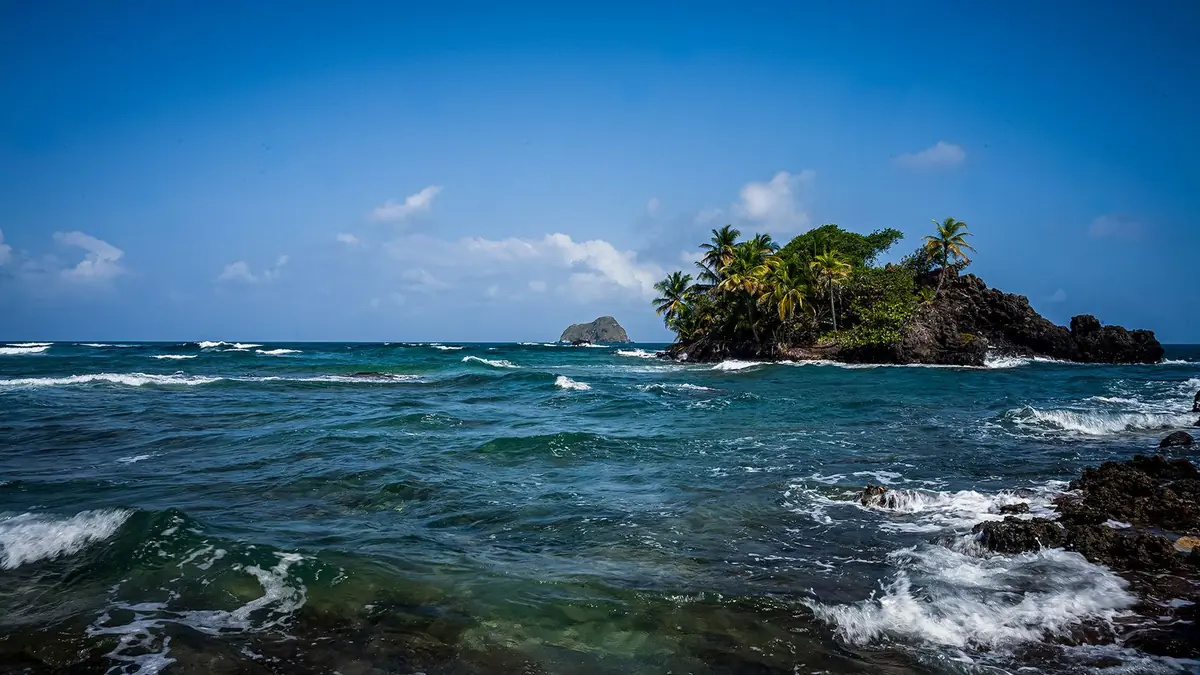
A clear-water bay 10 to 15 minutes away by boat, good for snorkeling. About a 10-minute walk away is the Piscina de los Dioses (Pool of the Gods), a pool formed by rocks at the edge of the sea.
-
04
Playa Soledad
Pale sand, turquoise water and jungle right down to the shoreline, about 25 minutes by boat from Capurganá. It's the most popular full-day trip in the area.
-
05
El Cielo reserve
A two- to four-hour hike through thick jungle and streams to waterfalls and cold-water pools. Use of the ecological trails is charged separately.
-
06
Diving the Darién
Capurganá has dives down to 30 meters (98 ft), with barracuda, grouper, rays and lobster. If you've never dived, El Aguacate is a good place to start with a mask and snorkel.
When to go
From December to April there's less rain; February is the driest month. Those months, plus Holy Week and the midyear school holidays, are high season, so book flights and hotels early. From May to November it rains more, especially in May, though downpours usually alternate with sunny spells. Between February and October, leatherback turtles nest on the beaches of the Acandí, Playón and Playona Sanctuary, with hatchlings emerging in July and August.
- Jan: Best. Little rain; high season early in the month
- Feb: Best. Driest month; leatherback turtles arrive
- Mar: Best. Dry, with fewer visitors
- Apr: Good. Holy Week crowds; turtles nesting
- May: Rainy. The rainiest month of the year
- Jun: Rainy. Rainy; turtle nesting season
- Jul: Good. School holidays; leatherback hatchlings emerge
- Aug: Rainy. Rainy; last turtle hatchings
- Sep: Rainy. Rainy, with few visitors
- Oct: Rainy. Frequent downpours; a quiet village
- Nov: Rainy. Rainy; check sea conditions
- Dec: Good. Rain eases; book ahead
-
Best
Jan – Mar
The best time to go.
-
Good
Apr · Jul · Dec
A good time, with a catch on weather or crowds.
-
Rainy
May – Jun · Aug – Nov
More rain: keep plans flexible.
What you need to travel
For Colombian travelers: a cédula is all you need to travel within Colombia, but here it's worth bringing a passport for La Miel, your vaccination card and cash for several local fees. Fees and checks change often, so confirm them before you go. Traveling on another passport? Requirements differ, so message us and we'll check yours.
Checked in October 2026 with Colombian Ministry of Health: recommended yellow fever vaccination zones. Rules change, so we confirm what applies to you when you book.
- ID: Colombian ID (cédula) for residents; passport for foreign visitors. For Colombian minors, tarjeta de identidad or registro civil (birth certificate).
- La Miel (Panama): documents are checked at the SENAFRONT post. Local operators report that Colombians on a day visit are asked for their cédula and passports aren't stamped, but bring a valid passport too, since border checks can change.
- Yellow fever vaccine: Acandí is in the Ministry of Health's recommended vaccination zone. Get the shot at least 10 days before and bring your card; you can check your record at mivacuna.sispro.gov.co.
- Local fees, in cash: a port fee at the departure dock, COP 10,000 for use of the ecological trails, and a tourist fee of COP 3,000 to COP 4,000 to enter La Miel.
- Community contribution: as of July 2026, the Cocomanorte community council was asking for a voluntary COP 50,000 per visitor and had announced plans to make it mandatory; Acandí's mayor's office opposes it. Ask whether it's in force when you book.
- Medellín–Acandí flights use small 19-seat planes, so check the airline's baggage limit before you pack.
- Boats leave in the morning and may be canceled in bad weather or rough seas. Always wear your life jacket.
Take the full guide with you
Entry requirements, best months, local tips and our favorite places to eat in Capurganá & Sapzurro, in a PDF you can keep on your phone.
Bokana tips
What we've learned running trips, and what we'd tell a friend before they go.
-
Bring cash from Medellín
Almost everything is paid in cash: boats, fees, restaurants and entry to La Miel. Budget for the whole trip and split the money across a few places.
-
Pack light and dry
The plane is small and on the boat, bags travel under plastic sheeting. Use a soft bag, put everything in waterproof bags and keep a small bag with your documents and phone close.
-
Early boat, light stomach
Boats leave in the morning and the ride can be bumpy. If you get seasick, take something before boarding, and confirm the departure time the day before.
-
Water and bug spray
Tap water isn't considered safe to drink, so buy water or bring a filter. For the trails, wear closed shoes that can get wet, and pack bug spray and sunscreen.
-
Go to La Miel early
Leave Sapzurro around 7 a.m. to hike in less heat and have the beach to yourself. The last boat back usually leaves around 4 p.m.
-
Check conditions before you go
This is a border area with a history of armed groups and migrant smuggling, though in the first half of 2026 crossings through the Darién were down more than 99% from 2023. Travel with licensed operators, stay on tourist trails and respect checkpoints.
What to eat
Arroz con coco
Coconut rice, the coast's essential side, made with grated coconut. It reflects the African roots of Caribbean cooking.
Fried fish with patacón
The catch of the day, crisp outside and juicy inside, with patacón (twice-fried green plantain), salad and coconut rice. The classic beach lunch.
Sancocho de pescado
A hearty fish soup with cassava, plantain and corn on the cob, made for sharing at the table.
Lobster and seafood
Lobster, crab, octopus and ceviche show up on menus all over town, almost always with coconut rice on the side.
Group trips to Capurganá & Sapzurro
Book your own spot, travel with a group, and have someone from Bokana with you the whole way.
Picture yourself in Capurganá & Sapzurro?
Let's plan it together.
Join one of our groups or bring your own people on a private trip.
More destinations in Colombia
Sources and photo credits
- Infobae: regresa el vuelo de Clic Medellín–Capurganá; Satena opera Medellín–Acandí (26 oct 2025)
- Technocio: Satena refuerza la ruta Medellín–Acandí con aviones LET L-410 de 19 pasajeros (jul 2026)
- Skyscanner: vuelos Medellín Olaya Herrera a Acandí
- El Espectador: cómo llegar a Capurganá y qué lugares visitar
- El Fin del Estrés: Necoclí a Capurganá en lancha, guía 2026
- El Tiempo: el polémico cobro de $50.000 en Capurganá y Sapzurro (15 jul 2026)
- Ministerio de Salud: mapa de zonas de vacunación recomendada contra la fiebre amarilla
- Ministerio de Salud: recomendación de vacunarse contra la fiebre amarilla a viajeros
- Parques Nacionales Naturales: Santuario de Fauna Acandí, Playón y Playona
- Parques Nacionales Naturales: tortugas caná y carey en el Santuario Acandí, Playón y Playona
- Visit My Colombia: La Miel desde Sapzurro, guía práctica 2026
- Awake Travel: Capurganá, Sapzurro y La Miel (documentos, tasas y vacunas)
- Roadtrip: Capurganá en 5 días (tasas locales 2026)
- Passporter: qué ver y hacer en Capurganá
- Climate-Data.org: clima de Capurganá
- Infobae: la ruta migratoria por el Darién casi vacía en 2026 (12 ago 2026)
- Human Rights Watch: Abandonados en la selva, migrantes en el Tapón del Darién (abr 2024)
- Viajando Colombia: experiencias gastronómicas en Capurganá
- Power Plugs & Sockets: Colombia
- Google Maps (fichas consultadas el 4 oct 2026)
Photos: Johan Andrés Toro (CC BY-SA 4.0), Wikimedia Commons (main photo) · Johan Andrés Toro (CC BY-SA 4.0), Wikimedia Commons · P.sutermeister (CC BY-SA 4.0), Wikimedia Commons · Johan Andrés Toro (CC BY-SA 4.0), Wikimedia Commons.