
Nuquí
A town with no roads on the Gulf of Tribugá. You fly in, get around by boat and, from July to October, watch humpback whales from the beach.
- Where it is
- Pacific coast, northern Chocó department, on the Gulf of Tribugá. Reyes Murillo airport is in town; hotels are reached by boat (Guachalito takes about 30 to 40 minutes).
- Getting there
- Direct from Medellín (Olaya Herrera airport): 45 minutes to 1 hour, on Satena, Clic or Moon Flights. From Bogotá and Cali there are flights in some seasons, or you connect in Medellín.
- Weather
- Warm and very humid year-round, 25 to 28 °C (77 to 82 °F). It rains almost daily: this is one of the wettest places on Earth. January to March is less rainy; August is the wettest month.
- Documents
- Colombian ID (cédula) for residents; passport for foreign visitors. Bring cash for the municipal tourism tax and a yellow fever vaccination card, with the shot given at least 10 days before.
- Money
- Colombian peso (COP). Bring enough cash from Medellín: there are hardly any ATMs and few places in the villages take cards. Small bills work best.
- Language
- Spanish. Most people are Afro-Colombian, and there are also Emberá Indigenous communities with their own language.
- Time zone
- Colombia time (UTC-5), no difference.
- Plugs
- Types A and B, 110 V, 60 Hz, same as the rest of Colombia. Some lodges only have power for part of the day.
Whales, rainforest and hot springs on the Pacific
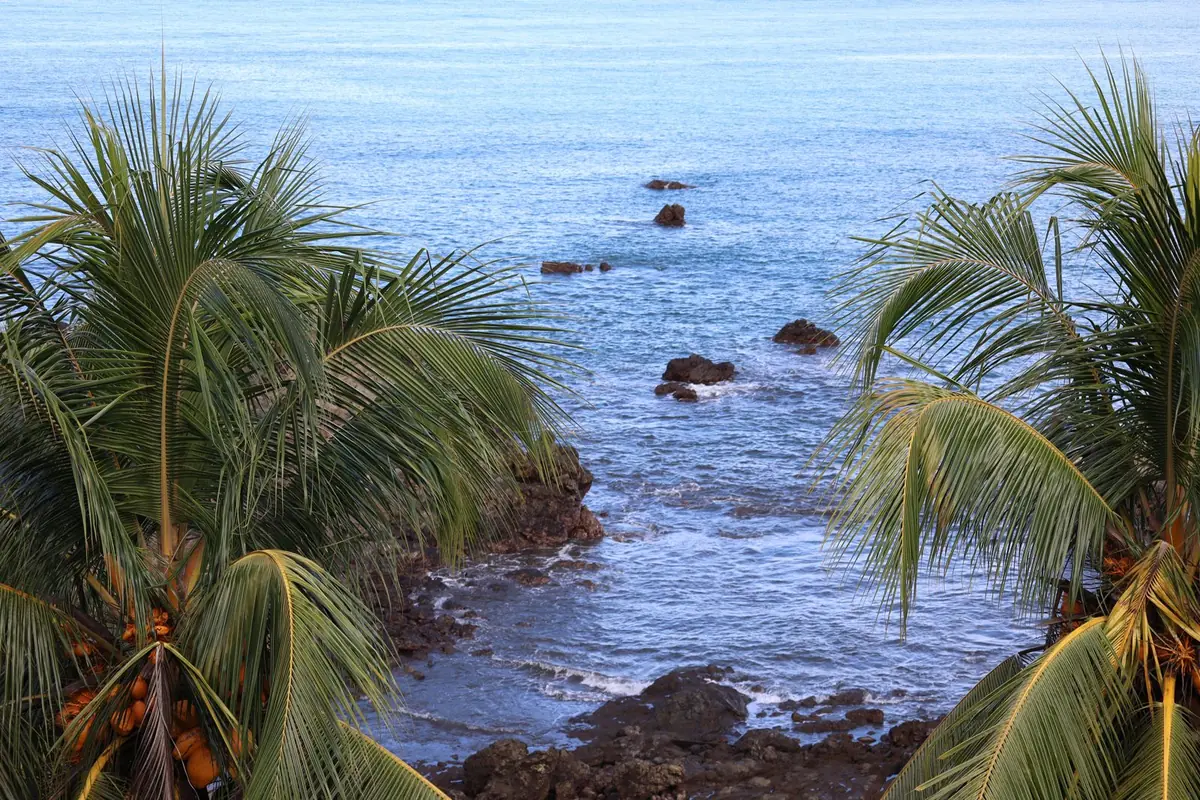
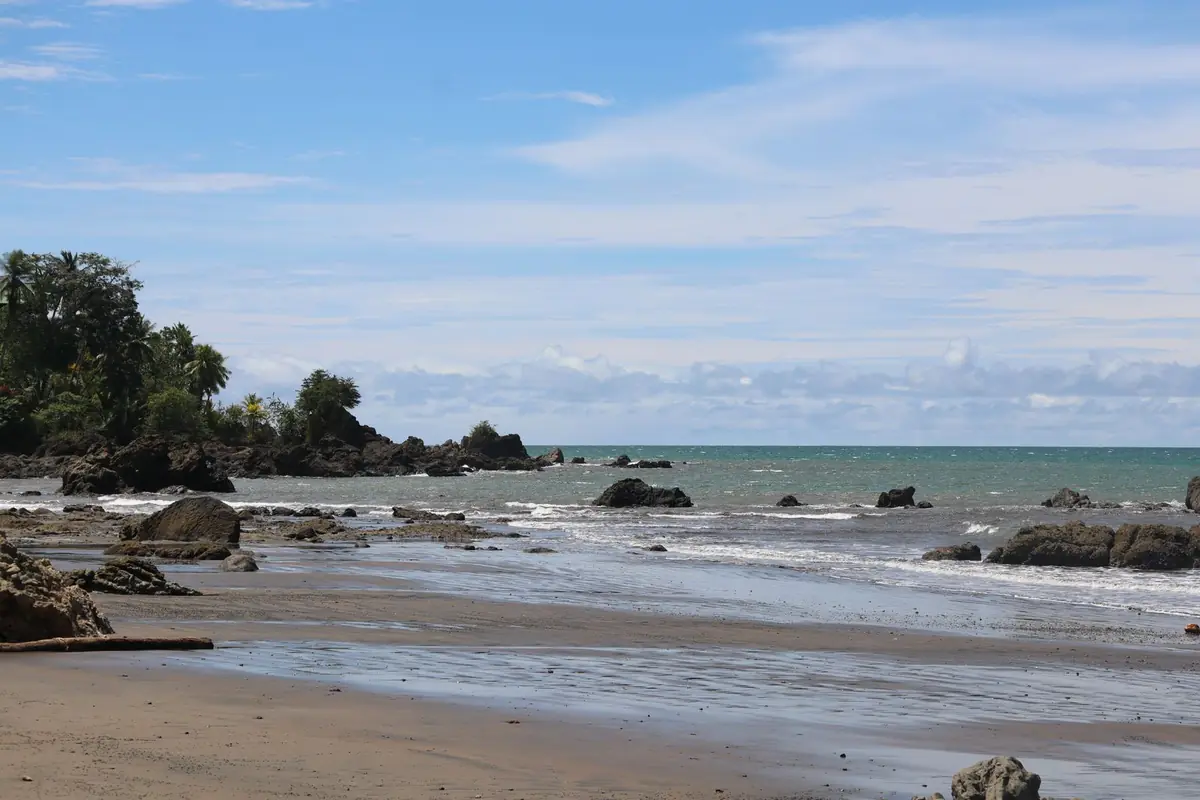
Nuquí sits on the northern coast of Chocó, on the Gulf of Tribugá. No roads reach it: you fly in from Medellín, then take a boat from town to villages like Guachalito, Termales, Joví, Coquí, Jurubirá or Arusí. Rainforest runs right down to long, dark-sand beaches, with mangroves, rivers and waterfalls a few minutes from the sea.
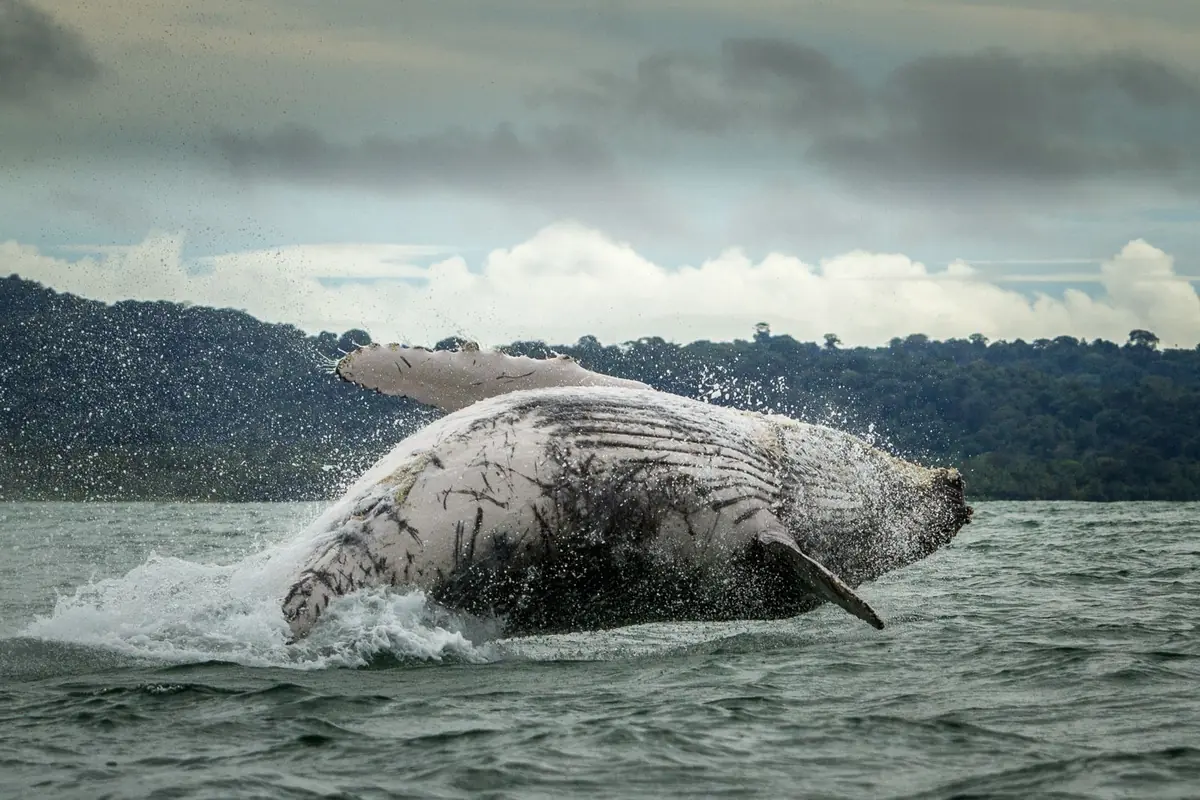
Between July and October, humpback whales arrive from the south to mate and give birth, and the gulf becomes one of the best places in Colombia to see them. The rest of the year is just as good for slowing down: natural hot springs, Pacific cooking from Afro-Colombian communities, rainforest hikes and Utría National Natural Park less than an hour away by boat. Expect rain almost every day, little signal and an easy pace. That's part of the trip.
Don't miss
-
01
Humpback whales
From July to October, whales come to the Gulf of Tribugá to mate and raise their calves. August and September are usually the best months. You'll often see them breach from the beach; for a boat trip, go with local operators who keep their distance.
-
02
Utría National Natural Park
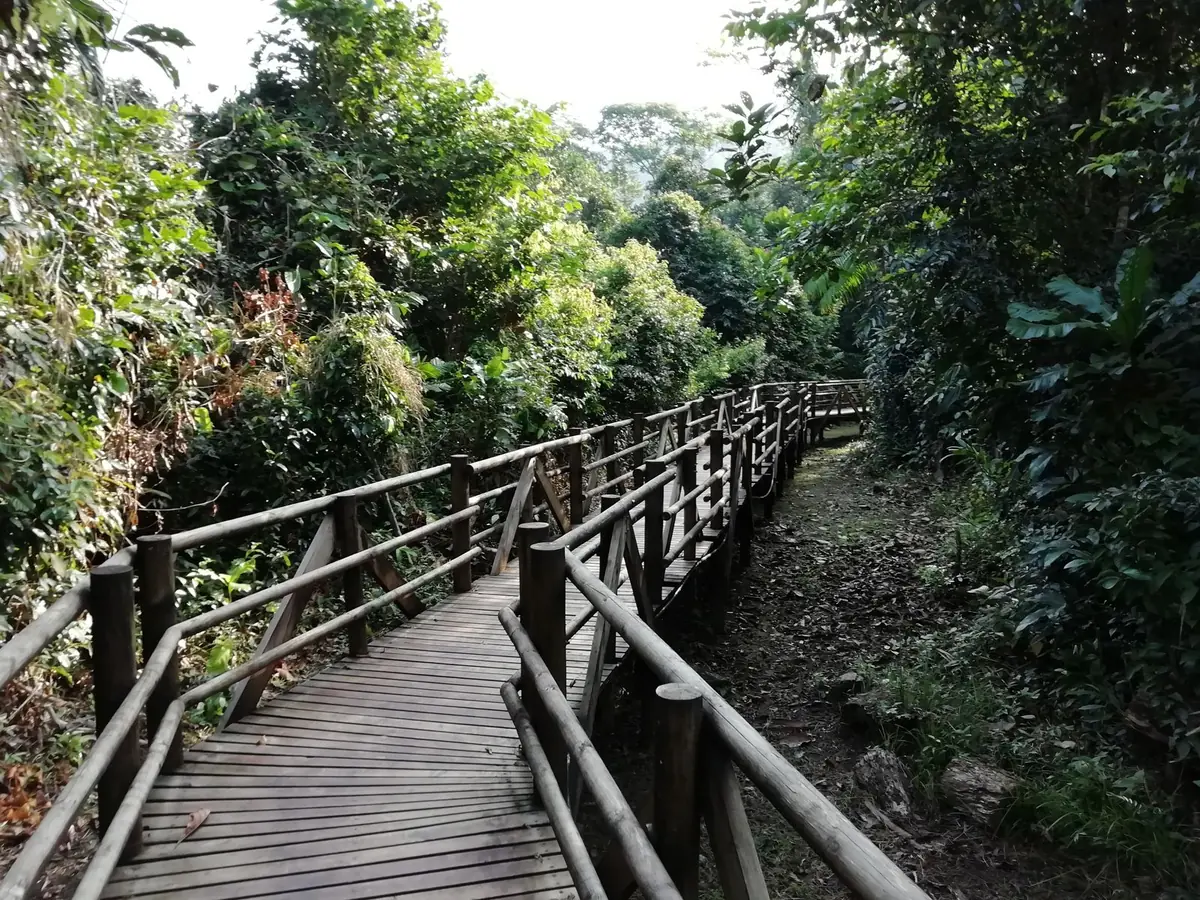
More than 64,000 hectares (158,000 acres) of rainforest, mangrove and reef. From Nuquí it's about 45 minutes by boat to walk the boardwalk over the mangroves, cross to Cocalito hill and beach, and swim in the cove. Entry is with an authorized guide.
-
03
Termales and Jurubirá hot springs
Pools of hot water that bubble up from the forest, close to the sea. Termales charges entry (COP 15,000 by day, COP 20,000 at night); Jurubirá's springs are about 30 to 45 minutes by boat north of Nuquí.
-
04
Guachalito and Cascada del Amor
A long, open beach backed by rainforest, home to several of the area's lodges. From Guachalito or Termales, a short forest hike leads to Cascada del Amor, a waterfall with pools for a swim.
-
05
Coquí mangroves
One of the largest mangrove forests in the region, explored by canoe with village guides in about 45 minutes. Coquí is also home to Zotea, the community restaurant run by the village's cooks.
-
06
Joví and its river
A small village between Coquí and Guachalito, linked to Coquí by 2.5 km (1.5 mi) of beach. Walk over at low tide, swim in the river and stay for a Chocó-style lunch.
When to go
If whales are the priority, go from July to October; August and September are the peak. It rains a lot in those months, so pack rain gear and be patient with flights. January to March brings less rain (February is the driest month) and fewer visitors, great for beaches, hot springs and hikes. Between September and February, baby turtles are released on several beaches, depending on the protected nests.
- Jan: Good. Less rain; good beach month
- Feb: Good. Driest month; no whales
- Mar: Good. Little rain, few visitors
- Apr: Rainy. Heavy rains return
- May: Rainy. Very rainy, low season
- Jun: Rainy. Lots of rain; whales still scarce
- Jul: Best. Whales arrive; book early
- Aug: Best. Peak whale season; wettest month
- Sep: Best. Peak whales; turtle season begins
- Oct: Good. Last whales of the season
- Nov: Rainy. Very rainy; turtle releases
- Dec: Good. Year-end holidays; turtles
-
Best
Jul – Sep
The best time to go.
-
Good
Oct · Dec – Mar
A good time, with a catch on weather or crowds.
-
Rainy
Apr – Jun · Nov
More rain: keep plans flexible.
What you need to travel
For Colombian travelers: Nuquí doesn't require a reservation or special permit, but you do need ID, cash for the municipal tourism tax and a yellow fever vaccine, which Utría National Park also requires. Pack light: the planes are small. Traveling on another passport? Requirements differ, so message us and we'll check yours.
Checked in October 2026 with Colombian National Natural Parks: Utría National Natural Park. Rules change, so we confirm what applies to you when you book.
- ID: Colombian ID (cédula) for residents; passport for foreign visitors. For Colombian minors, tarjeta de identidad or registro civil (birth certificate).
- Municipal tourism tax: paid in cash on arrival, at the airport or the dock. Since July 1, 2025, operators report COP 42,000 per person; the amount is set by the town hall and can change, so confirm it before you go.
- Yellow fever vaccine given at least 10 days before: Colombia's Ministry of Health lists Nuquí among the municipalities where vaccination is recommended. If more than 10 years have passed since your shot, Ministry of Health Circular 001 of 2026 calls for a booster for travelers to risk areas. You can check your record at mivacuna.sispro.gov.co.
- Utría National Park: Colombia's National Parks require a yellow fever vaccination card in their protected areas (Ministry of Health Resolution 691 of 2025), and entry is with an authorized guide. Entry and exit hours: 8 a.m. to 2 p.m.
- 2026 Utría entrance fees: COP 28,000 for Colombians and residents over 25; COP 19,000 for ages 6 to 25; COP 80,000 for non-resident foreigners.
- Luggage: airlines flying to Nuquí use small planes with tight allowances (on some routes, 10 kg (22 lb) checked and 5 kg (11 lb) carry-on). Check your ticket's allowance before you pack.
- Inside Utría, single-use plastics, taking wildlife and using unauthorized trails are not allowed.
Take the full guide with you
Entry requirements, best months, local tips and our favorite places to eat in Nuquí, in a PDF you can keep on your phone.
Bokana tips
What we've learned running trips, and what we'd tell a friend before they go.
-
Pack light
Baggage allowances are small and excess weight costs extra. Bring a backpack or soft bag, quick-dry clothes, and leave behind anything you won't use.
-
Cash from Medellín
There are hardly any ATMs, and in the villages you pay for boats, hot springs and meals in cash. Withdraw enough before you fly, in small bills.
-
Dress for rain
A light rain jacket, water sandals or rubber boots for the forest, a dry bag for your phone and bug spray. It rains almost every day, even in the drier months.
-
Mind the tide
Beach walks between villages and some boat landings depend on the tide. Ask your hotel when low tide is before you set out.
-
Actually unplug
Signal is weak outside town and several lodges only have power a few hours a day. Let people at home know you'll be mostly offline, and bring a power bank.
-
Watch whales responsibly
Go with local operators who cut or slow the engine near whales and never chase them. It protects mothers with calves and the community that depends on them.
-
Check the security situation
In March 2026 the ELN guerrilla declared an armed strike on rivers in Bajo Baudó, south of the municipality. Before you go, check the news and your hotel, and travel with licensed operators.
What to eat
Tapao de pescado
Fresh, smoked or salted fish cooked covered together with green plantain. One of the most common home-cooked dishes in Chocó.
Piangua and papachina
Piangua, a mangrove clam, and papachina, a local root vegetable, turn up in rice dishes, stews and chef-driven cooking like Zotea's.
Viche
A craft sugarcane spirit made by Afro-Colombian communities of the Pacific, recognized under Law 2158 of 2021. In Nuquí you'll find it neat or infused with herbs.
Borojó juice
A thick, tart fruit from the Chocó rainforest, served as juice or a shake alongside many local meals.
Group trips to Nuquí
Book your own spot, travel with a group, and have someone from Bokana with you the whole way.
Picture yourself in Nuquí?
Let's plan it together.
Join one of our groups or bring your own people on a private trip.
More destinations in Colombia
Sources and photo credits
- Parques Nacionales Naturales: PNN Utría (área, tarifas 2026, horario, requisitos, prohibiciones)
- Parques Nacionales Naturales: nuevo requisito de vacunación contra fiebre amarilla (2 may 2025)
- Minsalud: mapa de municipios con vacunación recomendada contra fiebre amarilla
- El Colombiano: refuerzo de fiebre amarilla, Circular Externa 001 de 2026 de Minsalud
- Vanguardia: tarifas 2026 de los parques nacionales (1 ene 2026)
- Colombia Travel (ProColombia): termales de Jurubirá, Nuquí
- Alcaldía de Nuquí: aumento del impuesto de turismo
- Traveland: impuesto de turismo en Nuquí desde el 1 de julio de 2025
- Semana: presupuesto real para viajar a Nuquí (5 may 2026)
- Jenene Lodge: cómo llegar a Nuquí (aerolíneas, tiempos, lancha)
- Jenene Lodge: aeropuerto de Nuquí (equipaje, efectivo, clima)
- Wego: horarios de vuelos Medellín a Nuquí
- Mascarón de Proa: recomendaciones generales para Nuquí (equipaje, energía, señal)
- Mi viaje por Colombia: qué hacer en Nuquí (actualizado jul 2026)
- Mi viaje por Colombia: visitar el Parque Nacional Utría
- Clic Air: avistamiento de ballenas en Nuquí
- Colombia Viajes Naturaleza: temporada de ballenas 2026
- Semana: liberación de tortugas marinas en el Chocó
- Wikipedia: Golfo de Tribugá (corregimientos, población, Hope Spot)
- Weather Spark: clima promedio en Nuquí
- El Espectador: ELN inicia paro armado en el Bajo Baudó, Chocó (mar 2026)
- Banrepcultural: la cocina tradicional del Chocó
- Secretaría del Senado: Ley 2158 de 2021 (viche)
- El Tiempo: así nació Zotea, el corazón culinario de Coquí
- Tom Plan My Trip: Arusí y el restaurante Poleo
- Power Plugs & Sockets: Colombia
- Google Maps (fichas consultadas el 4 oct 2026)
Photos: Diferoch (CC BY-SA 4.0), Wikimedia Commons (main photo) · Dwayne Reilander (CC BY-SA 4.0), Wikimedia Commons · Jorgegutierrezpareja (CC BY-SA 4.0), Wikimedia Commons · Diferoch (CC BY-SA 4.0), Wikimedia Commons.